
Construction waste disposal in Spring Valley Village
Construction waste disposal in Spring Valley Village connects your commercial build-out with a material-specific receiving plan at Neuens Road or Holmes Road. Bring your own material to DW Companies on Neuens Road or Tannahill on Holmes Road, with concrete and pavement asphalt arranged separately. Describe the load and vehicle before dispatch, or request a container when the project needs on-site collection.
Arrange disposal for a Spring Valley Village commercial project
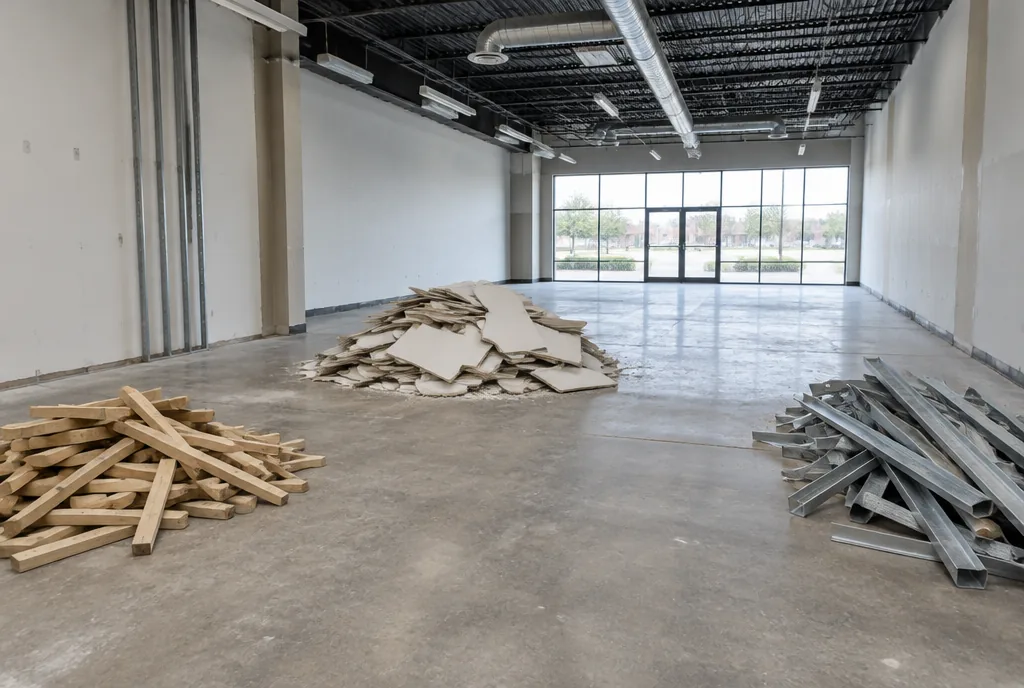
Start with the waste your work will produce and the person responsible for moving it. A small commercial build-out can generate wood offcuts, removed wallboard, metal framing and packaging. The description should include attached finishes and other components, rather than treating everything from the property as the same construction waste.
DW Companies receives qualifying waste at 9461 Neuens Road, Houston, TX 77080. Call 713-465-7231 with the particular material and vehicle to arrange that load. Tannahill's receiving operation is at 1800 Holmes Road, Houston, TX 77045. Its qualifying mixed C&D includes wood, drywall, metal, plastics and cardboard.
At Tannahill, dirt, roofing shingles, liquids, chemicals and hazardous or regulated materials stay out of mixed C&D. Concrete and pavement asphalt follow the separate Houston Crushed Concrete receiving path at Holmes Road, 713-799-2000. Identify those materials early, before the loading crew combines them. The accepted-material guide explains the main distinctions for your request.
Separate the project approval from the receiving plan
Spring Valley Village is an independent city with its own municipal administration for business and development matters. Organize the property work under the requirements that apply to the actual site and project. The property representative and contractor should establish the work area, material collection point and any necessary project permissions.
The receiving plan answers a different question: what material will leave, how much is expected and which operation will receive it. Permission to perform building work does not describe the resulting load. Conversely, a disposal arrangement does not settle where a contractor may stage debris or place equipment at the property.
Keep these responsibilities clear in the work plan. Use the site's actual address and city when discussing project requirements, then give the disposal contact the material, condition and vehicle. If a container is needed, include the proposed placement area and delivery and pickup access. This lets the project team resolve its site arrangements while the receiving operation evaluates the actual debris.
Choose batch hauling or a temporary collection point
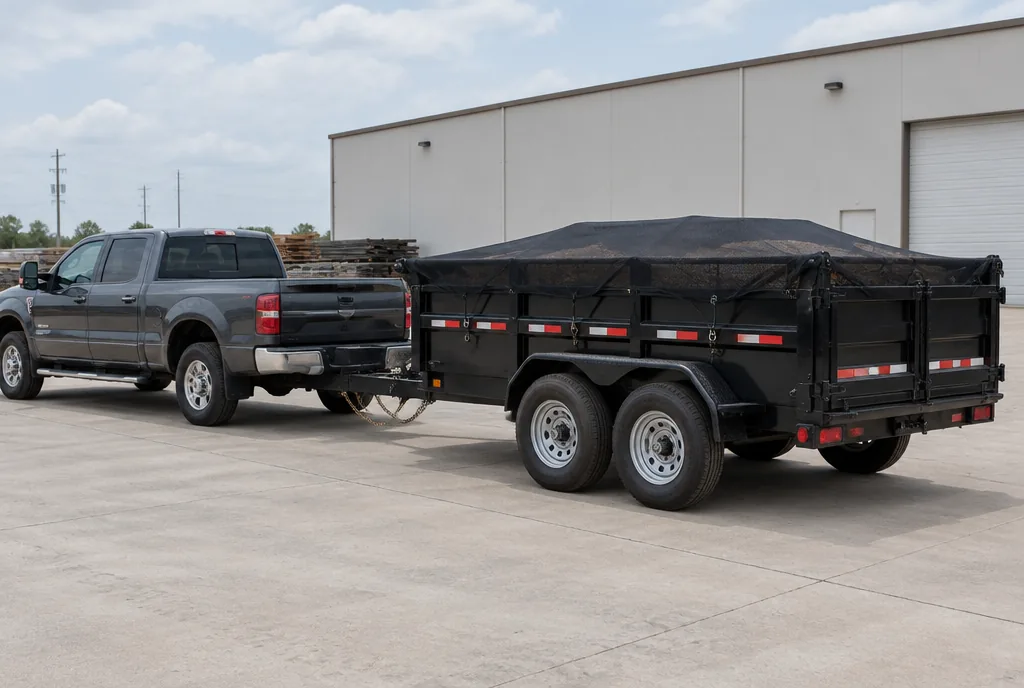
A project vehicle ready for the load
A suitable pickup or trailer can remove a completed batch from a short build-out. Plan the loading work and the full journey, including check-in, unloading and return. The driver and vehicle must be available for that task rather than counted simultaneously on another part of the job.
Match the equipment to the material. Bulky wood pieces can fill space quickly, while a smaller amount of broken concrete can carry much more weight. Available bed space is not a loading limit. Describe the actual vehicle when arranging receiving and use its rated capacities in your own transport plan.
A container while work continues
A commercial roll-off can give trades a consistent collection point over a longer sequence. Plan where it sits and how delivery and collection vehicles will approach it. Include the site's ZIP code, debris type and expected amount in the request.
Your crew loads the container; loading assistance is arranged separately. Compare that arrangement with batch hauling according to the project's actual space, material generation and driver availability.
Keep interior debris and paving rubble identifiable
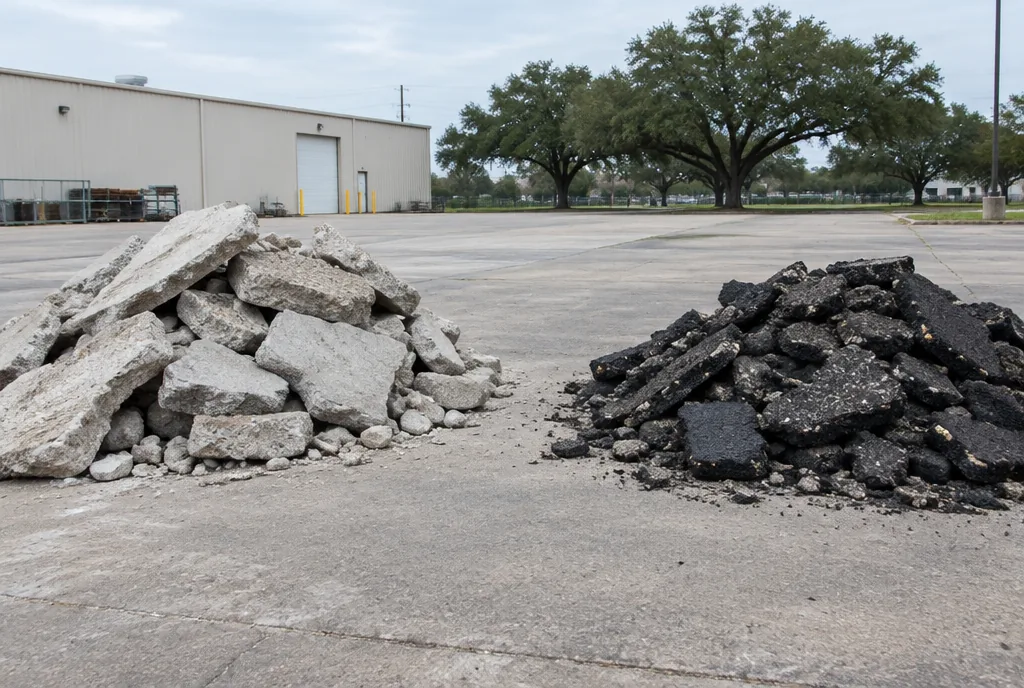
A hypothetical build-out may begin with wood and gypsum-board partitions, then move to a walkway or apron replacement. Plan those phases as separate material streams. The first is a mixture of interior building components; the later phase produces dense mineral rubble that needs different transport and receiving consideration.
Source separation means keeping the streams apart where they are generated. It is easier to identify a separate concrete pile than to recover concrete from beneath framing and shattered board after loading. Give the crew a clear collection instruction before removal starts, and keep excluded materials away from both piles.
For wood and drywall, describe attachments and mixed-in materials, not only the largest visible component. For concrete or pavement asphalt at Holmes Road, give Houston Crushed Concrete the source, condition and approximate amount. Describe soil, roofing material or other contamination separately instead of assuming a rubble label covers the whole load.
Prepare the quantity and vehicle for your quote
Send the material and its source, approximate quantity, intended day, vehicle and preferred receiving operation. Include a contact who understands the pile. If the request concerns several phases, explain how the debris changes between them and when each load is expected.
Use an estimate with a clear basis: pile measurements, an approximate filled trailer volume or another stated method. Irregular pieces leave gaps, so occupied space is different from material weight. Project floor area also cannot determine load count without knowing which assemblies are removed. The load-estimate guide can help you frame the request.
Keep the quote scope aligned with the transport choice. Customer hauling and a delivered container involve different movements. Before sending your driver, carry the arranged receiving instructions with the load; a general business-hours listing should not replace the agreed arrival plan for that material and vehicle.
Spring Valley Village along Campbell Road
Spring Valley Village is an independent city among the Memorial Villages, distinct from Houston's nearby Spring Branch community. Campbell Road is a useful local point of orientation: City Hall is at 1025 Campbell Road, and the City Park is part of that civic campus. The park provides a setting for outdoor time and community gatherings alongside the city's administrative center.
For a commercial project, use the individual property's address and city in the work plan. DW's Neuens Road receiving location remains a separate destination for qualifying loads. Nearby Hedwig Village has its own municipal identity. See the service-area and receiving-location hub when coordinating projects across these communities.
Answered Questions
Which address and material details belong in a Spring Valley Village disposal request?
Give the actual site address and city, the materials and work that produced them, approximate quantity, vehicle and intended timing. Include your preferred receiving operation. Keep municipal project and staging requirements with the property work plan; receiving eligibility depends on the material and arrangements for the load.
Can a small build-out use a pickup or trailer instead of a dumpster?
Yes, customer hauling can suit a qualifying batch when the vehicle and driver fit the task. Describe the pickup or trailer and the materials when arranging receiving. Include the full trip and loading time in your plan, and match the vehicle capacity to the material weight.
Does permission for the work approve the debris for unloading?
No. Project permission concerns work at the property; the receiving arrangement concerns the actual debris. Describe the contents and condition, amount, vehicle and destination before dispatch. Keep site requirements and the load instruction together in the project plan, with each responsibility clearly assigned.
What if the project adds concrete removal later?
Keep that rubble separately identifiable and update the disposal request for the new phase. Concrete is much denser than typical loose interior debris. At Holmes Road, contact Houston Crushed Concrete at 713-799-2000 for the separate concrete or pavement-asphalt receiving arrangement.
What should I supply when requesting a jobsite container?
Include the actual project address and ZIP code, materials, approximate amount, expected timing and proposed placement and access. Explain how debris will reach the container and how delivery and collection can occur. Your team loads it, with any loading assistance arranged separately.
Arrange the next Spring Valley Village load
Request a quote with the actual materials, quantity estimate, vehicle and preferred receiving location. Add the project ZIP code and placement information when requesting a container instead.