
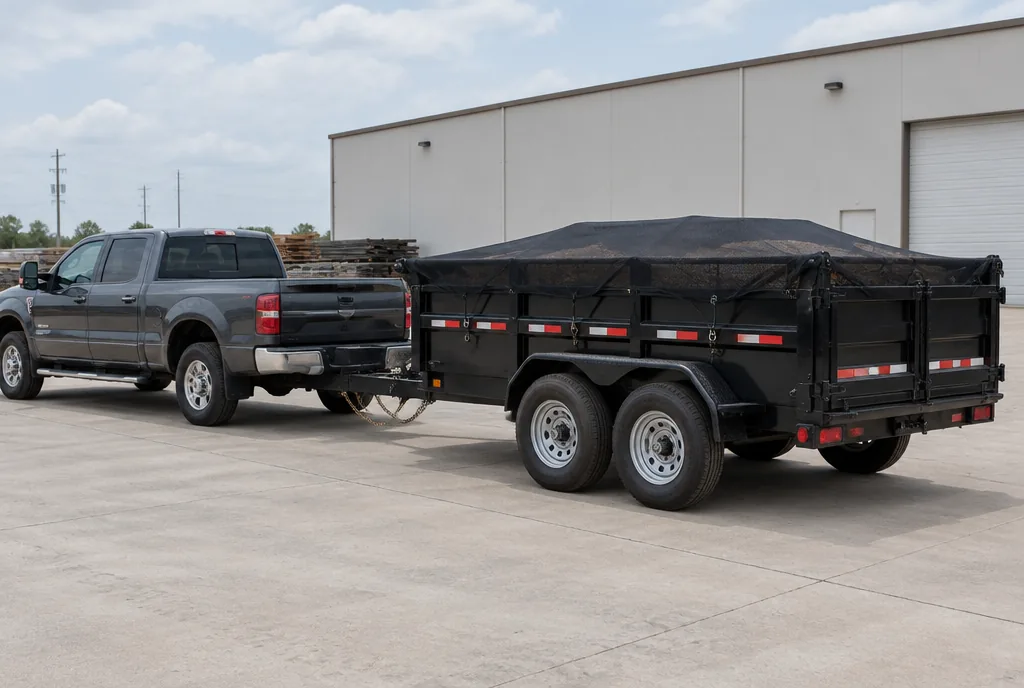
Dump trailer or roll-off for construction debris?
A dump trailer is towable equipment that carries debris, while a roll-off is a collection container delivered and collected by a truck. A temporary roll-off rental can keep a collection point at the jobsite while work continues. Choose between them by matching available equipment, driver time, material and access to the way your project produces debris.
A dump trailer moves debris; a roll-off collects it on site
A dump trailer can collect and move material when the project has a suitable tow vehicle, qualified driver and appropriate load arrangement. It is useful to consider when the equipment already serves the job and the debris is ready for a planned trip. That convenience still depends on the actual material and receiving destination.
A roll-off provides a defined collection point while work progresses. The agreed rental arrangement covers its delivery and pickup terms, while the project maintains a loading and placement plan. The box can remain available during a phase instead of leaving the site with every haul.
Neither description establishes suitability for a particular heavy load. Begin with the actual stream through construction debris disposal, then decide which collection and transport method can handle it properly.
Choose around the equipment and labor you have
For a trailer plan, identify the complete vehicle combination, driver, loading method and receiving arrangement. Equipment that is needed elsewhere on the project has an opportunity cost when it is occupied by waste. Include the driver's time away from other work, not only the outward journey.
For a roll-off plan, establish where the container will sit, how the crew will load and how delivery and collection can occur. The project needs its own loading labor. Do not treat a container rental as an automatic crew to carry material from the work area.
Compare these responsibilities before requesting prices. A lower equipment charge is not necessarily the lower complete cost when one option requires a crew member and vehicle for repeated trips. The self-haul comparison develops that broader choice.
Compare access at both ends of the trip
The trailer or collection vehicle needs a usable approach to the loading point and a suitable receiving/unloading plan at the other end. Account for turns, gates, parked vehicles, pedestrian activity and the area where material will be transferred. A vehicle that can enter does not automatically have room for every loading or unloading movement.
A roll-off requires access at delivery and pickup, not just an empty spot on the first day. Construction staging can change over a week; stored supplies or other equipment should not block collection. Include the proposed placement and changing site conditions in the rental request.
Do not assume a trailer is always smaller or easier to place. DW's published trailer diagram is 16 feet long by 8 feet 6 inches wide, while its 12-yard roll-off diagram is 10 feet by 8 feet. Those container dimensions do not describe every operating clearance. Compare the actual equipment and approach rather than the category name.
Let heavy material change the capacity plan
Concrete, masonry and soil can make weight the central decision. DW specifies its designated 16-yard rental option for concrete and dirt, with material-specific loading limits. Do not choose a larger box simply because the project has a large volume of dense material.
Receiving and rental rules remain separate. Tannahill does not accept dirt at Holmes Road. Concrete and pavement asphalt there use the separate Houston Crushed Concrete operation. A suitable rental container for a material does not establish where a self-hauled load of that material can go.
For any trailer, work within the actual tow vehicle, trailer and load requirements. A general online cubic-yard description cannot establish the permitted payload of your equipment. Keep the material and movement plan together, and avoid using visible empty space as the loading limit.
Build a complete cost comparison
For self-haul, include receiving charges, driver time, fuel, loading equipment and the effect of the vehicle being away. For rental, establish the container, period, accepted material, disposal allowance, delivery/pickup and additional-charge terms. Use the same project scope on both requests.
Consider the pattern of debris production. One finished pile may suit a defined trip. A renovation producing material throughout the week can benefit from a container available near the work. A project can also use both methods for separate streams.
For example, a contractor might keep mixed renovation debris in a collection container while a separately arranged rubble load moves by suitable equipment. That is a workflow example, not a promise of a specific trailer payload or receiving approval. Request a commercial rental plan when jobsite collection is the need you are solving.
Account for the collection period
The equipment is occupied from the start of collection until the load is removed, not only during the trip. A trailer gradually filled over several days may be unavailable for other tasks throughout that period. A roll-off may hold a dedicated collection role while the tow vehicle remains in normal service.
On the other hand, a defined pile that can be loaded and moved in one operation does not necessarily need a container left at the project. Compare the duration and pattern of accumulation before choosing. This avoids focusing on equipment size while overlooking how long it must remain committed.
State the collection period alongside access and material in the request. It explains the operational problem the equipment should solve. If the method changes, preserve the receiving description: switching between trailer and roll-off does not remove material restrictions or appropriate loading limits.
Technical detail: vehicle payload versus container volume
Payload is not cubic capacity
Payload concerns the weight carried within the applicable equipment limits. Cubic capacity concerns occupied volume. Debris can reach either constraint first, depending on its composition and packing. Keep those concepts separate when estimating equipment or trips.
Loading and unloading are part of equipment selection
A dump mechanism does not eliminate the need for a suitable unloading arrangement. The vehicle, material and receiving instructions still need to work together. Likewise, a roll-off's loading door or nominal space does not determine the entire site-access plan.
A useful selection record states the material, estimated quantity, collection duration, loading responsibility, available transport and site constraints. That record makes the equipment choice reviewable and reduces guesses based on the size name alone. It also provides the right starting information for a disposal or rental quote, while leaving actual equipment operating requirements with the applicable vehicle and service arrangement.
Answered Questions
Is a dump trailer always better for a tight site?
No. Compare actual dimensions and operating space. The published DW trailer footprint is longer and wider than the 12-yard roll-off diagram, and either option needs adequate loading, movement and collection access.
Can I compare the options using cubic yards alone?
No. Volume is only one constraint. Material weight, equipment limits, loading responsibility and the time the equipment is occupied can change the practical choice.
Does a roll-off order include loading from inside the building?
Do not assume interior carrying or loading labor is included. Arrange the project loading responsibility separately from the container and its delivery/pickup terms.
Match equipment to the material and work area
Describe the waste, approximate amount, site access and available vehicle or driver. Request the receiving or rental arrangement that fits the actual project.