
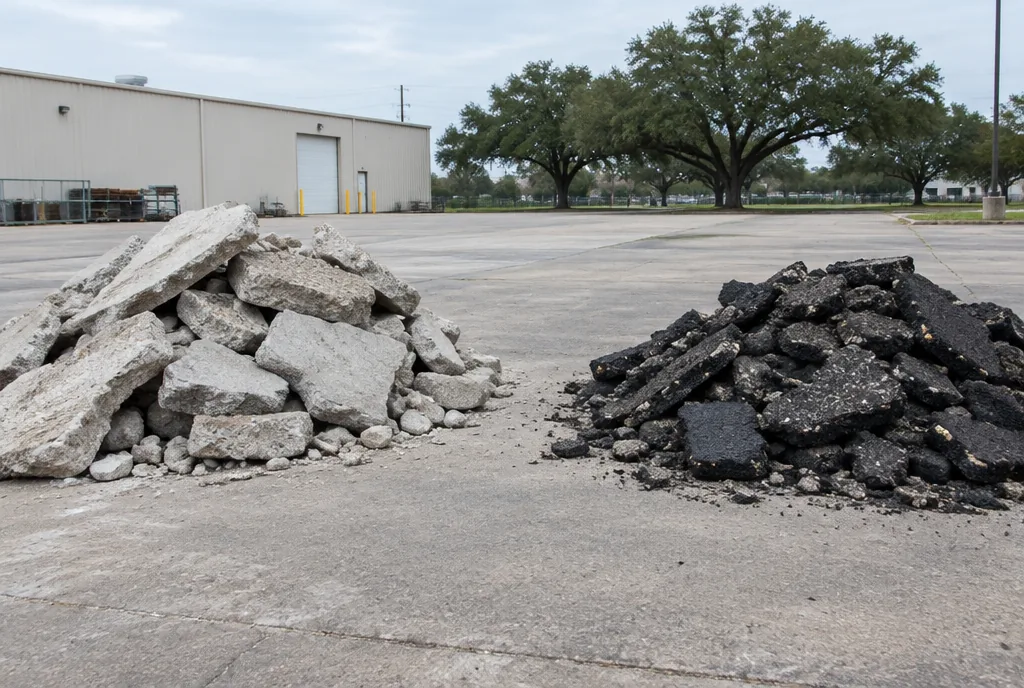
How to separate construction debris before hauling
Separate construction debris by material and receiving path before loading. Keep concrete and pavement asphalt apart from mixed C&D, exclude restricted items and preserve those divisions until each load reaches its destination.
Separate rubble from mixed building debris first
The first useful division is between heavy mineral rubble and the mixed building debris around it. Framing, wallboard and packaging do not become concrete-recycling material just because they came from the same demolition area. Start by naming the streams the work is producing and deciding where each will go.
At the shared Holmes Road facility, Houston Crushed Concrete handles concrete and pavement asphalt separately from Tannahill's qualifying mixed C&D. Tannahill excludes dirt and roofing shingles. Make that distinction before a loader or crew combines piles for convenience.
The concrete and asphalt receiving path addresses separated rubble enquiries. Use the mixed-C&D service for the appropriate construction load. Separation is useful only when it matches an actual receiving arrangement; it is not a promise that every separated material has a recovery outlet.
Make the sorting plan fit the work area
Place collection areas where crews can use them during normal work. A distant or poorly identified pile is easy to bypass when material is being removed quickly. Give each area a plain description of the material intended for it, and explain the arrangement to the people actually loading.
Keep customer access, deliveries and equipment movements in mind. Separation that obstructs the work can create repeated rehandling. On a constrained site, phase the collection or use distinct movements instead of attempting to store every possible stream at once.
Assign someone to maintain the arrangement as trades change. The separation plan should remain understandable after the initial supervisor leaves. Make a change deliberately when the work shifts from partitions to flooring or from structure to site work, rather than letting later debris erase the first sorting decision.
Recognize materials that need their own route
Unknown containers, liquids, equipment residues and suspect building components should not be hidden in an ordinary mixed load. Identify them through the project's appropriate material-management process. Sorting C&D is not a method for evaluating or treating hazardous substances.
Keep dirt out of Tannahill loads, even if it is attached to or underneath other debris. Roofing shingles and asphalt roofing material are also excluded there. Pavement asphalt is a separate material from asphalt roofing; the shared word asphalt does not give them the same receiving path.
For brick, masonry, fixtures or unusual mixtures, describe the actual components rather than relying on a general label. The accepted-material guidance helps organize that description. A material's broad membership in the C&D category does not establish acceptance at every yard.
Keep separation intact during loading and dispatch
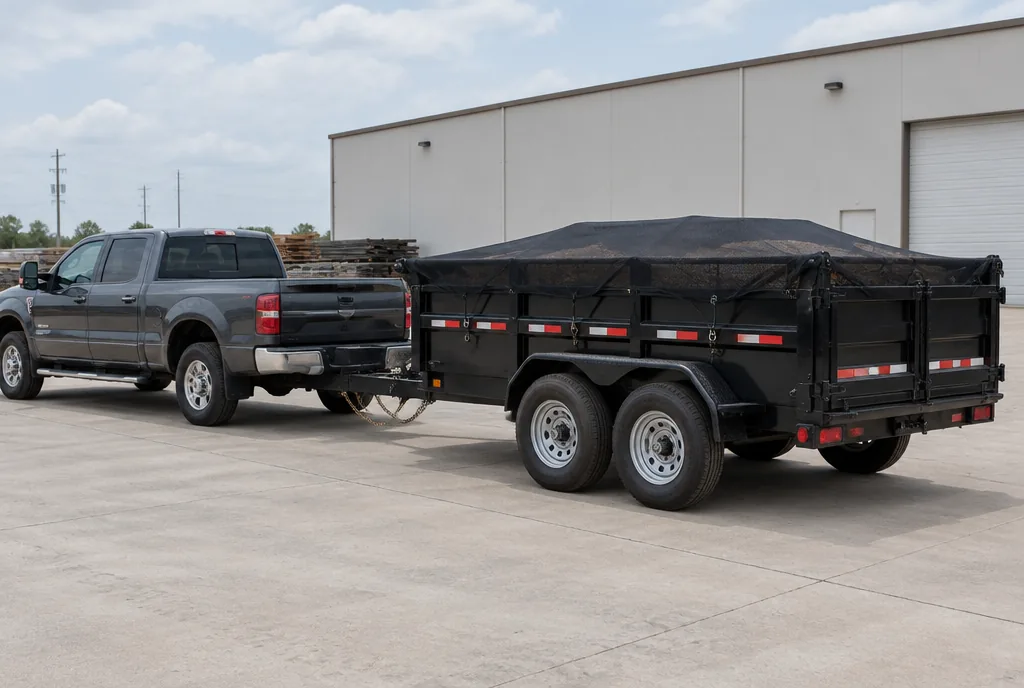
A pile can be well separated and still become a mixed load during loading. Give the loader or crew the same stream names used in the receiving request. Check that the vehicle is carrying the intended material before sending it to the destination chosen for that stream.
Do not add miscellaneous site waste to a nearly finished rubble load to save a separate movement. That can change the description and undermine the receiving plan. Where several vehicles operate, identify which truck is assigned to which material and avoid using an empty vehicle as an unplanned catch-all.
Keep the driver informed if the load includes attached material or unusual pieces that were part of the review. A clear dispatch description preserves the connection between the pile, the quote and the receiving operation. It also helps the project distinguish a load change from an administrative mix-up.
Example: a commercial interior strip-out
For example, a commercial interior strip-out may produce metal studs, drywall, wood doors, packaging and a small amount of concrete from a separate alteration. The useful plan is not automatically one container per listed component. It is a set of collection choices that fits the site's space and the actual receiving paths.
The crew might maintain a qualifying mixed-C&D stream for suitable building debris while keeping concrete separate for its own review. Unknown cans or products discovered in storage remain outside both streams. As later phases begin, the site lead updates the plan so floor material or fixtures are identified rather than casually added.
This is a planning example, not a prescribed sorting specification. The point is to connect each division to a real destination and to keep the working crew's instructions simple. For phased work, the commercial renovation disposal plan ties the stream changes to the project sequence.
Match sorting instructions to the people loading
Use ordinary material names rather than a code only the estimator understands. If one pile is intended for mixed interior debris and another for concrete, explain what belongs in each and who decides when a new item appears. The plan should remain usable when a different trade or relief loader takes over.
Review the collection area at a phase change. A layout that worked for partitions may need another arrangement once flooring, fixtures or exterior material begins moving. Make the change while streams remain identifiable, then update the receiving description and driver information together.
The best system is one the crew can maintain through the real work sequence. More separate piles are not automatically better when they lack selected destinations or require repeated transfers. If space or work changes make the original arrangement impractical, revise the collection plan deliberately rather than allowing an accidental mixture.
Technical detail: contamination and recoverable material
Source separation preserves options
Source separation means keeping material streams apart where they are generated. It can preserve options for salvage or recovery by avoiding mixtures that are harder to identify and process. It does not prove that a particular facility will recycle a load or supply a specified diversion percentage.
Contamination describes more than appearance
For planning purposes, describe foreign material, coatings, attached components and unknown residues, not just whether the pile looks tidy. A visually uniform rubble pile can still contain material that changes the receiving decision. Conversely, an irregular but well-described construction load can be understandable without looking neatly stacked.
The practical output is a material record that survives the whole process: generation, collection, loading and arrival. Keep the same names and note meaningful changes. This reduces the need to reinterpret a mixed pile later and gives the receiving team a clear basis for the actual load decision. Send the stream descriptions before arranging transport.
Answered Questions
Does every material need its own container?
No. The useful divisions depend on the actual receiving paths, work sequence and available space. Keep incompatible or restricted streams apart, then choose a practical collection arrangement for the qualifying material.
Are pavement asphalt and roofing shingles the same disposal stream?
No. They are different materials with different receiving requirements. Tannahill excludes roofing shingles and asphalt roofing material; pavement asphalt enquiries go to Houston Crushed Concrete separately.
Does sorting guarantee a recycling credit?
No. Sorting can preserve recovery options, but a recycling or diversion claim needs evidence of the material destination and handling. Keep records of what actually occurred rather than assuming a credit from separate piles.
Match your separated streams to a receiving path
List the major materials, approximate amounts and planned vehicles. Request the appropriate disposal arrangement before the separate piles become loaded trucks.