
How to estimate a construction debris load
Estimate a construction debris load by identifying the material, measuring its occupied volume and stating the assumptions. Use cubic yards for space and keep any weight estimate separate; a pile measurement does not establish a vehicle payload or receiving allowance.
Start with material and dimensions, not a guessed truck count
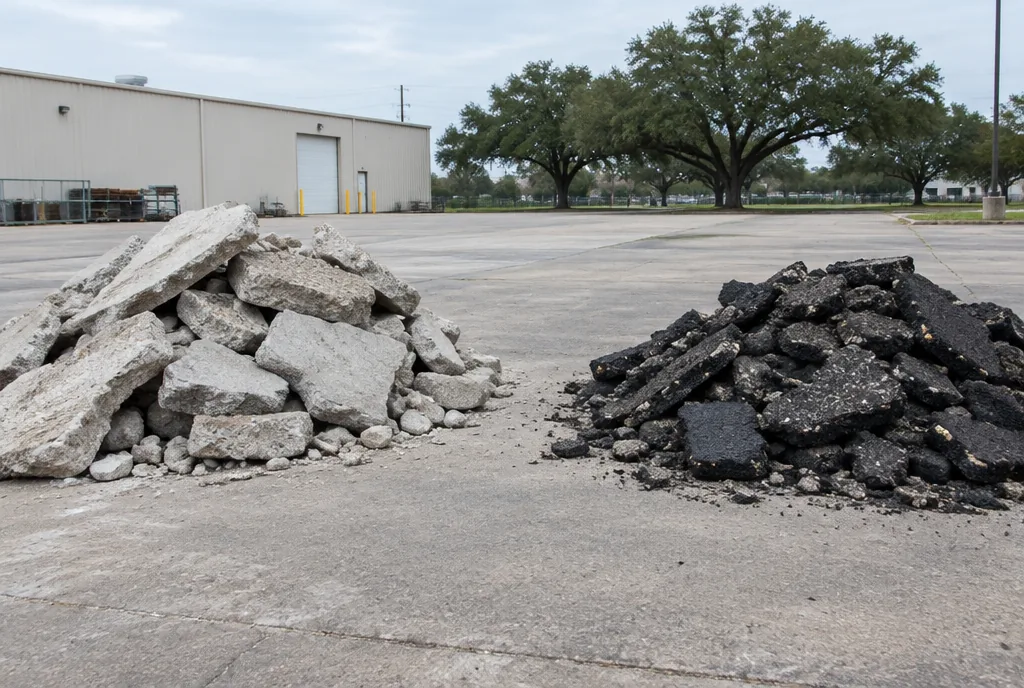
Identify the stream first: mixed framing and drywall, separated concrete, pavement asphalt or another described material. The same volume can behave differently when its contents change. A clear material description makes the number useful to the person planning receiving or equipment.
Measure a defined pile or collection area rather than guessing from the project size alone. A building's floor area does not directly reveal how much debris a particular renovation will produce. Removal depth, components, packing and the actual scope of work all affect the resulting pile.
For multiple streams, keep separate estimates. A mixed-C&D total and a rubble total should not become one number without identifying both components. Use the commercial disposal enquiry to share the estimate along with the material and planned vehicle.
Convert a measured pile into cubic yards
For an approximately rectangular pile, multiply length by width by average height, using feet throughout. That produces cubic feet. Divide by 27 to express the same volume in cubic yards. Measure the occupied material rather than including an unused part of the collection area.
For example, a roughly rectangular pile 10 feet long,6 feet wide and 3 feet high occupies about 180 cubic feet. Dividing 180 by 27 gives about 6.7 cubic yards. This is a geometry example, not a weight estimate or approval to carry that amount in a particular vehicle.
Write the measurements with the result so another person can understand the basis. If the pile changes, repeat the measurement or explain the additional amount. A practical estimate is more useful when its inputs remain visible than when it is presented as a precise number without context.
Show the arithmetic in the request
A useful field note might read: approximately 10 feet by 6 feet by 3 feet average height, mixed wood and drywall, measured before loading. The receiving contact can understand the geometry and material together. A bare number such as seven yards leaves those assumptions hidden.
If there are two piles, measure and label them independently before preparing a project summary. Keep concrete or pavement material distinct from mixed C&D even when both measurements use cubic yards. Shared units do not make streams interchangeable.
Repeat the estimate when the pile changes significantly. State whether the later measurement replaces the earlier one or represents additional material, so the office does not count the same pile twice. A useful estimate reduces uncertainty without hiding it: the measuring basis, material and sensible range give the receiving discussion understandable inputs and help the project revise the plan when better information becomes available.
Account for irregular shapes and empty space
Real debris piles are rarely perfect boxes. The highest point is not the average height, and empty space around a tapered edge is not material. Break a complicated pile into simpler measured parts or use a clearly labeled planning range instead of treating the largest outside dimensions as a solid block.
Recognize voids within bulky materials too. Framing, doors and irregular components leave air spaces, while smaller broken material can pack differently. A volume estimate describes the pile as it currently occupies space; loading and settling may change that arrangement.
Use photos to show the shape and add the dimensions in the message. A wide view and a stated measuring basis are more useful than a close-up that hides the size of the pile. Do not imply exact quantity when the geometry or hidden contents remain uncertain.
Keep weight separate from the volume estimate
Weight depends on the material and its condition, not only its volume. Concrete, wood and mixed wallboard do not share one reliable weight-per-yard value. Moisture, attached material and air gaps can change the relationship further. Do not apply a generic conversion to every construction load.
If you have a suitable project-specific weight basis, state what it is and distinguish it from a measured weight. Otherwise share the material and volume estimate without inventing tonnage. The vehicle still needs to be suitable within its applicable loading requirements.
DW's designated 16-yard rental setup is used for concrete and dirt, with material-specific limits. This does not mean the box can be filled to its nominal volume with any dense material, and it does not authorize dirt drop-off at Tannahill. Keep those separate decisions visible.
Turn the estimate into a dispatch or rental plan
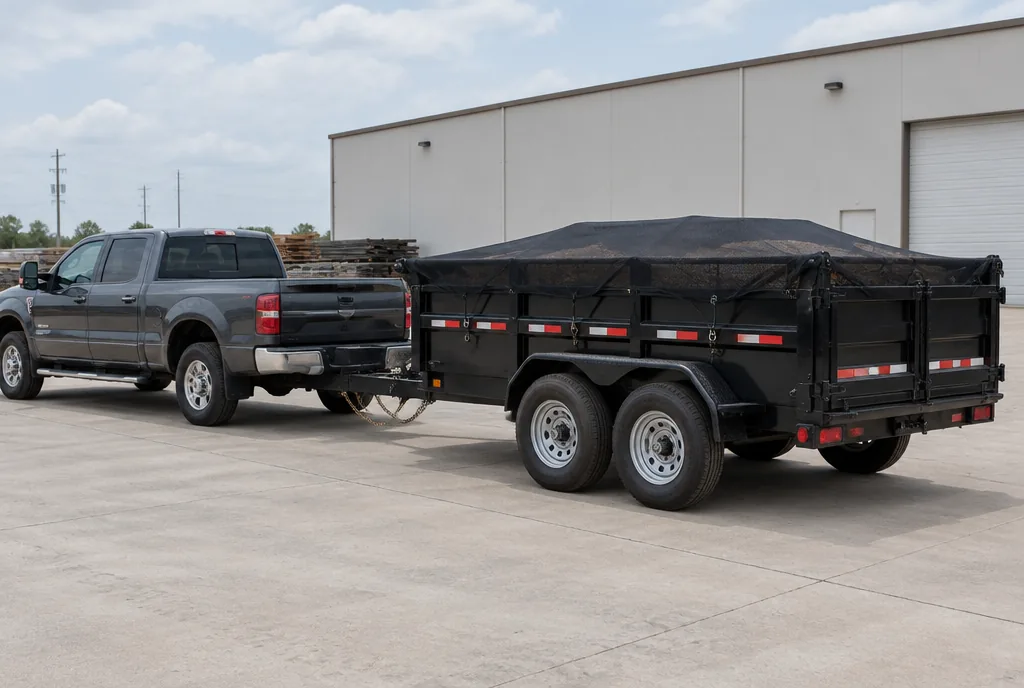
Share the estimate with the intended method: a self-haul vehicle, a proposed container or an expected series of movements. Include whether the material is ready now or will be generated over several phases. This helps distinguish a single finished pile from a project forecast.
Do not calculate trips solely by dividing estimated yards by a vehicle's nominal space. Weight, usable loading arrangement and receiving conditions can reduce the suitable amount per movement. For bulky loads, volume may constrain the plan; for dense loads, another limit may come first.
Use the multiple-load planning guide to connect the estimate to actual movements. For collection over time, compare the commercial rental option using the actual debris and site access, not only a chosen box size.
Technical detail: uncertainty and a useful field record
Use consistent units
Convert all length measurements to the same unit before multiplying. Feet multiplied by feet multiplied by feet gives cubic feet; dividing by 27 gives cubic yards. A square-foot measurement alone is area, not debris volume, and requires a relevant thickness or height to become a volume calculation.
Record a useful uncertainty range
If part of a pile is hidden or irregular, state a reasonable planning range and describe why. Do not add decorative decimal places to an uncertain estimate. The purpose is to support a receiving and equipment decision, not to make a field estimate look like a scale measurement.
Keep the material, date, dimensions, shape assumptions and result together. Compare that record with actual movement information as the project progresses. A revised estimate should explain what changed: pile size, material or measurement basis. Send the measured load description so the next decision starts with understandable inputs.
Answered Questions
How many cubic feet are in a cubic yard?
One cubic yard contains 27 cubic feet. Divide a measured cubic-foot volume by 27 to express it in cubic yards, using consistent length units in the original calculation.
Can I estimate debris from building square footage alone?
Not reliably for an individual removal scope. Square footage describes area, while debris volume depends on what is removed, its thickness or dimensions and how the resulting material occupies space.
Does a volume estimate tell me the trailer can carry it?
No. The vehicle loading decision also depends on weight, equipment limits and the actual material. A geometric pile estimate is not a payload rating or receiving approval.
Send an estimate with its measuring basis
Include the material, pile dimensions or stated yards, approximate condition and planned vehicle. Keep any measured or estimated weight clearly identified.