
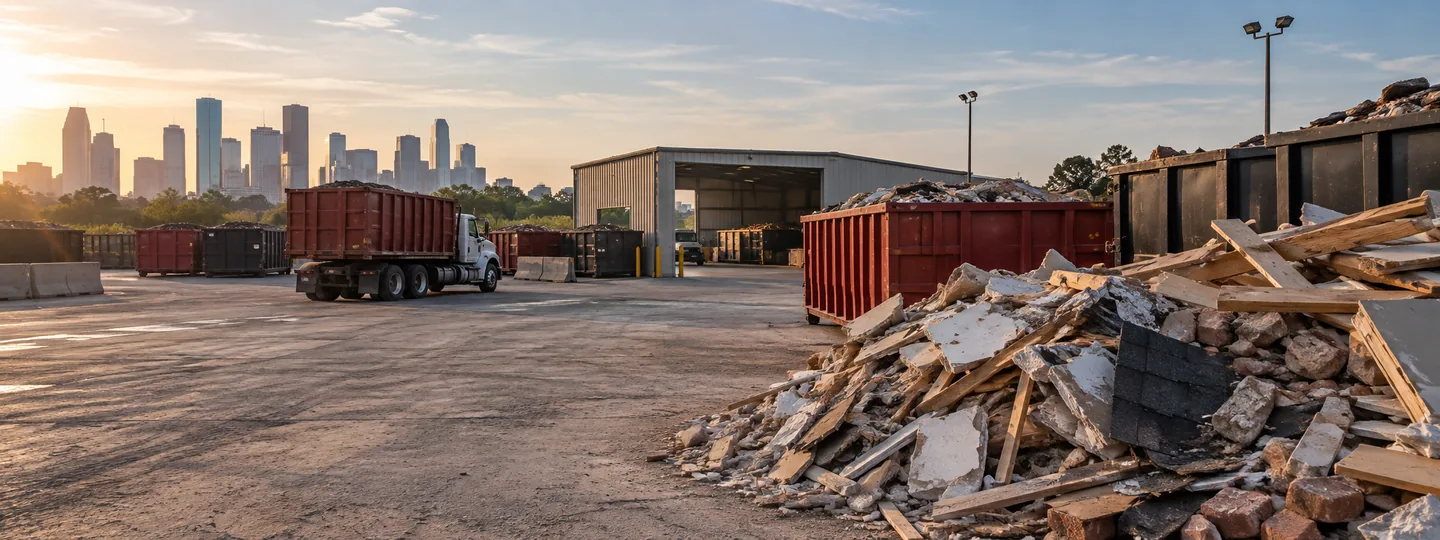
Transfer station or landfill for construction debris?
A transfer station receives and consolidates material for onward movement, while a landfill is a final disposal destination. For your construction load, the first decision is whether the receiving operation accepts the actual material and supports the planned arrival.
A transfer station and a landfill perform different jobs
A transfer station is an intermediate receiving point in the waste movement process. A landfill serves a different role as a disposal destination. These terms explain facility function, but neither term alone tells you the accepted materials, price or arrival requirements for a specific load.
For a commercial contractor or hauler, the practical choice begins with the debris stream and vehicle. Do not assume that every transfer station accepts all C&D, or that every landfill accepts the same materials. Material origin, condition and mixture remain important.
The construction debris disposal path helps organize an enquiry around qualifying C&D. Keep the actual receiving identity clear so a generic search for a dump does not become an instruction to bring unsuitable material to the wrong operation.
Choose an eligible destination for this load
Describe the material before choosing solely on distance or facility name. A load of framing and drywall needs a different discussion from separated concrete, pavement asphalt or soil. Naming the job as demolition is not enough to determine acceptance.
Use the material, approximate amount, vehicle and timing to establish the receiving path. Include unusual components or mixed streams that could affect the answer. This allows the destination decision to follow the load rather than requiring the project to reinterpret its waste after arriving.
Keep excluded material outside the ordinary C&D stream. At Tannahill, dirt and roofing shingles are not accepted. A general industry list of construction materials does not override that facility-specific rule. Review the restricted-material guide before loading a broad site-cleanup mixture.
Use the actual Houston receiving paths
Construction Waste Houston connects commercial load enquiries with two receiving destinations: DW Companies on Neuens Road and Tannahill at 1800 Holmes Road. Keep the receiving instructions for the selected load with the driver. Choose between the two locations according to the actual material and the planned trip from your project.
Tannahill handles qualifying mixed C&D. At the shared Holmes Road facility, concrete and pavement asphalt are handled separately by Houston Crushed Concrete. These receiving paths should remain distinct in both the material pile and the enquiry.
Use the two-location overview to select an enquiry path. Give the driver the receiving business name as well as the address: DW Companies at Neuens Road, Tannahill for Holmes Road mixed C&D or Houston Crushed Concrete for the separate rubble operation.
Compare the trip and receiving process
Compare the complete truck movement: loading, outward travel, receiving, unloading and any required return. A farther destination is not automatically more expensive, and a nearer one is not automatically suitable. The eligible receiving path comes first; time and cost can then be evaluated on the same described load.
Establish current hours and vehicle/unloading instructions for the actual trip. Tannahill's normal Holmes Road hours are Monday-Friday 7 am-5 pm and Saturday 7 am-1 pm, closed Sunday. Different operators at a shared site should not be assumed to have identical receiving terms or hours.
Give the driver the contact, material description and destination rather than only a search result link. A complete drop-off preparation record connects the quote to the movement and gives the project someone who can answer a load question.
Compare like-for-like receiving enquiries
Use the same material list and approximate quantity when comparing destinations. If one request describes only separated concrete and another includes mixed debris, the receiving paths are not direct alternatives. Keep each response attached to its material description.
For example, a commercial project can need a destination for interior C&D and another for a pavement alteration. The contract may describe both together, but each load should have an understandable receiving identity. That is more useful to the driver than a general instruction to find the nearest dump.
After eligibility is resolved, compare the complete trip, unloading arrangement and current charge. This prevents a low or convenient-looking figure from becoming the basis for an unsuitable movement. Keep the instructions with the project record after the trip. When another phase produces different material, start from its actual description rather than assuming the former destination remains suitable.
Keep material recovery separate from disposal assumptions
Disposal and material recovery are related planning topics, but they are not interchangeable claims. A separated material may retain a recovery option that is harder to use once mixed. Whether a specific load is recovered, processed or ultimately disposed requires evidence of its actual handling.
Do not infer a recycling percentage from the name of the facility or from sending debris to a transfer station. A transfer receipt records a receiving event; it does not necessarily describe every later movement or final use. If the project has reporting requirements, address those before arranging the first loads.
For concrete and pavement asphalt, the separate receiving identity matters. Preserve the stream and its destination information. The project can then distinguish the commercial receiving arrangement from any later claim about aggregate production, reuse or diversion.
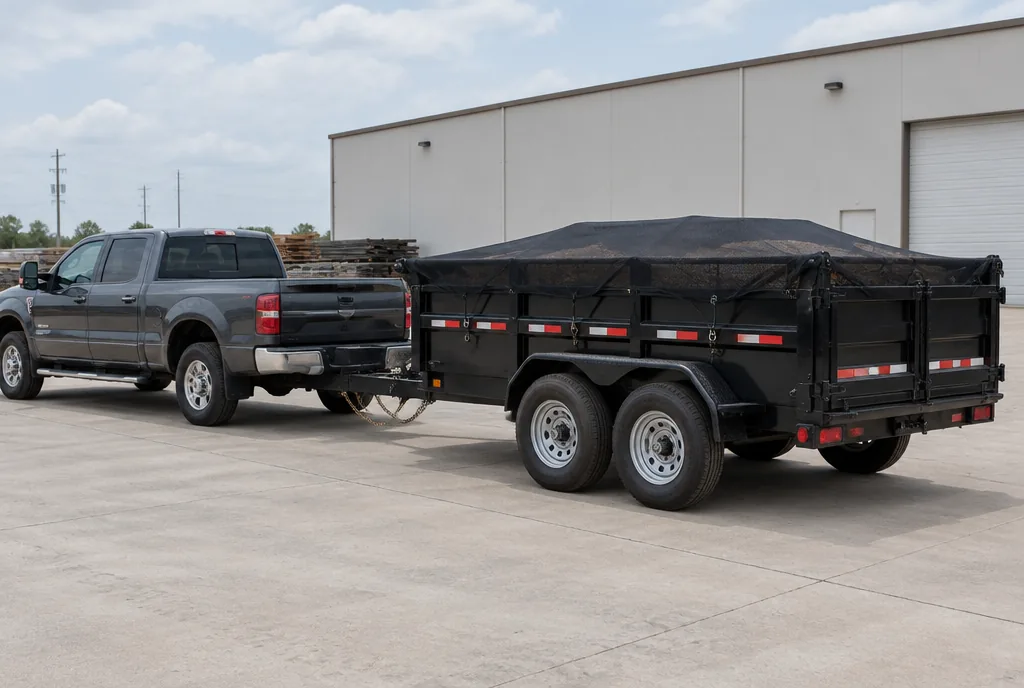
Technical detail: movement, consolidation and final destinations
Consolidation changes transportation, not material identity
Intermediate receiving can organize material for onward movement, but the load still has the characteristics it brought from the project. Mixing a restricted stream with familiar C&D does not make it acceptable. Accurate descriptions remain important through each stage.
Follow the evidence through the movement
A useful project trail connects the origin, material, date, vehicle, receiving operation and documents actually supplied. The record should state what it demonstrates. A receipt can support that material was received; a broader recovery claim needs evidence addressing that claim.
For the buyer, this means choosing a destination based on accepted material and a practical arrival plan, then retaining the records needed for the project. The facility category is a starting definition, not the entire decision. Organize the supporting records to reflect actual events rather than assumptions about what happens after the truck leaves.
Answered Questions
Is a transfer station the same as a concrete recycling operation?
No. A transfer station and a material-processing operation have different roles. At Holmes Road, Houston Crushed Concrete handles concrete and pavement asphalt separately from Tannahill mixed C&D.
Can I choose a facility from its name alone?
No. Establish material eligibility, vehicle/unloading requirements and current receiving instructions for the actual load. Facility category or proximity does not establish acceptance.
Does a transfer-station receipt prove recycling?
Not by itself. It can document the receiving event, while a recycling or diversion claim requires evidence of the material handling that supports that specific claim.
Choose the receiving path for your actual load
Describe the construction material, approximate quantity, vehicle and planned date. Organize the right destination and instructions before departure.