
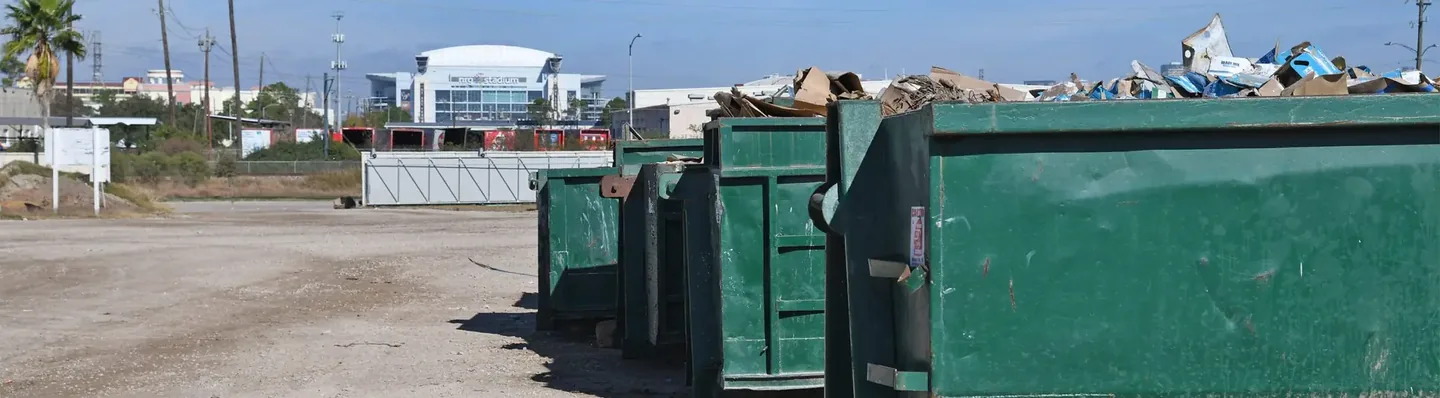
Construction waste disposal in Garden Oaks
Construction waste disposal in Garden Oaks can fit a staged self-haul load when your material, vehicle and loading arrangement work together, with a temporary dumpster available for ongoing collection.
Choose a collection plan for a staged contractor load
A small commercial project does not always need continuous debris collection. If the next batch is defined and a suitable vehicle is available, your contractor can load it and arrange a customer-haul receiving movement. Keep the material description and loading responsibility clear before choosing that approach.
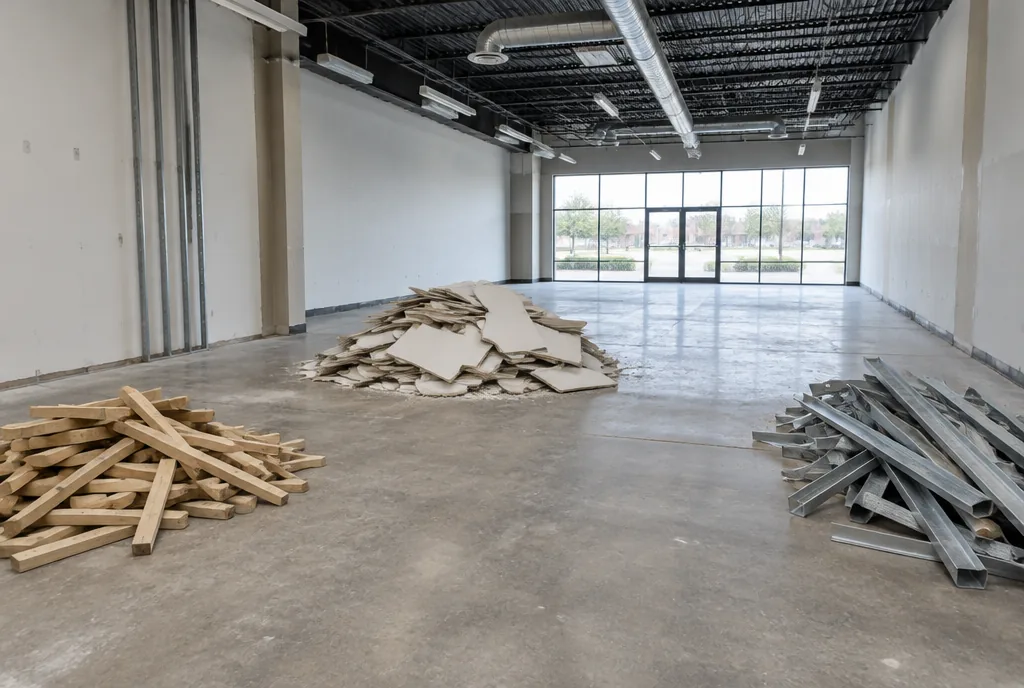
Staging works best when the crew knows which material will leave together. For example, a finish-removal job may produce several batches rather than one large pile: removed wood and drywall first, then a denser material or another phase. Identify those differences instead of treating the entire project as one small load.
When material keeps accumulating while the vehicle is needed for the work, a temporary dumpster provides collection at an appropriate site location. The customer loads the container; loading assistance is arranged separately. Compare the collection need with the available space and transport arrangement. Either method still needs the right material decision, including separate handling for rubble, excluded products and equipment contents.
Choose the receiving path for the staged materials
DW Companies receives qualifying waste at 9461 Neuens Road, Houston. Call 713-465-7231 with the actual material, its source and condition, the quantity and your vehicle or container arrangement. Those inputs turn a broad project description into a useful receiving inquiry.
Holmes Road offers distinct receiving paths. Tannahill handles qualifying mixed C&D at 1800 Holmes Road, with a hard hat, safety vest and check-in on arrival. Dirt and roofing shingles are excluded from that mixed stream. Concrete and pavement asphalt are handled separately through Houston Crushed Concrete; call 713-799-2000 for that inquiry.
Keep liquids, hazardous materials and unidentified products out of ordinary C&D. If a removed fixture contains refrigerant or another product, describe its contents separately from the building material around it. A small quantity does not remove those distinctions. Use the accepted-material guide to organize the inquiry, then send the driver with instructions for the actual load.
Assign an unloading plan to the vehicle
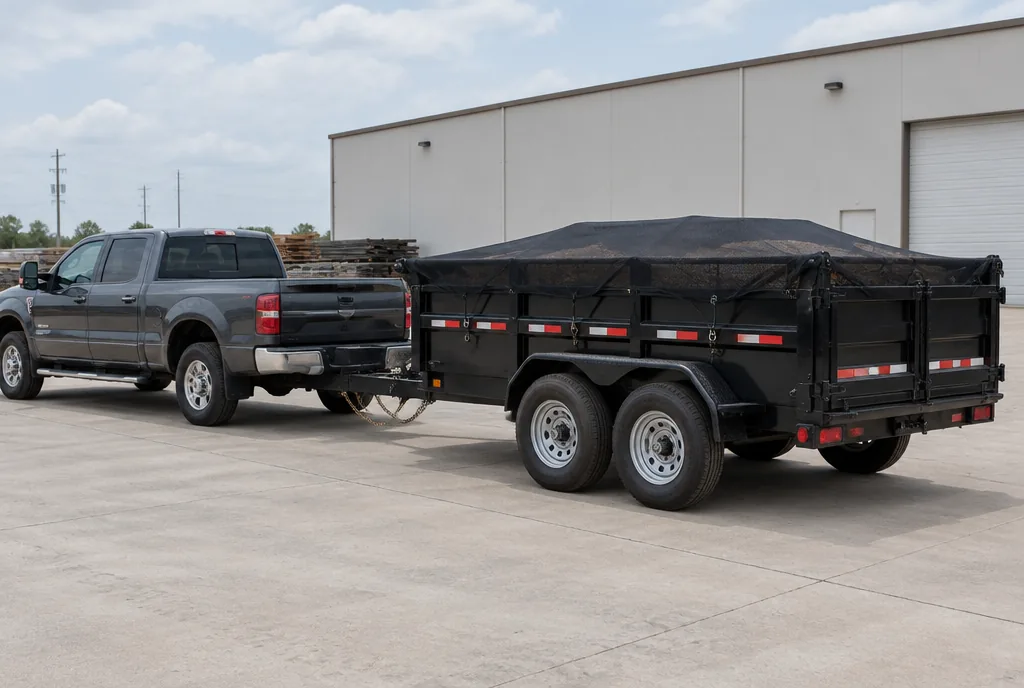
A towable dump trailer and a roll-off container are different equipment arrangements. The trailer travels behind a suitable towing vehicle under the customer’s transport plan. A roll-off is a collection container handled by a delivery and collection truck. Choosing between them starts with who has the equipment and how the project needs to collect material.
For self-haul, describe the vehicle or trailer configuration and how the load will be unloaded. Dimensions, contained material and the unloading method can affect the receiving arrangement. Give that information with the inquiry rather than relying on the name of the vehicle alone.
At Tannahill, arrive with the required hard hat and safety vest, check in and follow the yard’s directions for unloading. Keep the driver’s contact and material description available. Your contractor or customer-arranged crew handles jobsite loading; receiving instructions serve a different part of the movement. The commercial hauler service information helps connect the vehicle, load and destination before departure.
Measure loose debris and plan its weight separately
A useful estimate describes both occupied space and what fills it. This is especially helpful for a staged load, where the material may be ready to move before it fills a vehicle’s entire available space. State the assumptions with the estimate so the quantity remains understandable.
Measuring a loose pile
For a rectangular planning estimate, multiply length, width and height measured in feet. Divide the resulting cubic feet by 27 to express the volume in cubic yards. For example, a measured space of 6 feet by 4 feet by 3 feet contains 72 cubic feet, or about 2.7 cubic yards.
That calculation describes the measured space. An irregular pile of loose pieces contains gaps, so its outline does not establish an exact solid-material quantity. Include the pile shape and loose condition when describing it for a construction-debris receiving inquiry.
Identifying dense components
List tile, concrete and other dense pieces separately from bulky wood or drywall. A smaller pile can still create a substantial weight constraint. Concrete and pavement asphalt also need their own receiving decision through the separate rubble path, rather than being hidden inside an interior-debris estimate.
Matching the estimate to transport
Use the actual vehicle and trailer limits alongside the material description and unloading method. Occupied volume alone does not determine weight or the allowed load. If the available transport does not fit the movement, a temporary container may suit ongoing collection, while a defined eligible batch can suit a properly arranged self-haul trip.
Garden Oaks north of the North Loop
Garden Oaks is a distinct Houston neighborhood north of the North Loop, with the civic association describing its location between Ella and Yale. The Garden Oaks Boulevard esplanade and the neighborhood’s green spaces contribute to its familiar community character.
Gazebo Park sits on Sue Barnett between Lamonte and West 42nd Street. Graham Park near Shepherd and West 34th provides another recognizable destination on the southern approach.
Garden Oaks and nearby Oak Forest each have their own community identity. For work at a neighborhood-serving commercial property or around the perimeter roads, use the actual loading point and property access arrangement. A staged contractor load can then be connected to its receiving destination without assuming that every property or street has the same collection needs.
Describe the Garden Oaks material movement for a quote
Send the material source and condition, approximate quantity, vehicle or container arrangement and timing. Explain whether the quantity comes from measured dimensions, a filled space or an irregular pile. Include dense components and any separate material stream so the receiving team can evaluate what will actually arrive.
Request a commercial disposal quote for the staged load, or call DW at 713-465-7231 about Neuens receiving. If the work needs collection to remain at the site, select the dumpster option and include the placement ZIP. The practical result is a plan that connects the collection method, material and destination.
Answered Questions
Can a small contractor load use the same receiving inquiry as a larger job?
Yes. Describe the actual material, quantity, condition and vehicle so the appropriate receiving path can be evaluated. A smaller load still needs a clear material description. Its size alone does not establish eligibility, a particular minimum charge or a free disposal allowance.
Who loads a self-haul trailer?
The customer or contractor arranges loading and transport. A dump trailer is towable equipment within that arrangement, while a roll-off is a collection container delivered and collected by truck. The rental option also involves customer loading, with loading assistance arranged separately when needed.
When does a temporary dumpster make more sense?
A container can suit debris that continues accumulating while the crew needs its vehicle elsewhere. It also needs an appropriate placement and access arrangement at the actual property. Compare that collection need with the option of moving a defined eligible batch in an available vehicle.
What if the load contains heavy tile or concrete?
Identify the dense components separately. Occupied volume does not establish the material’s weight or the vehicle’s allowed load. Concrete and pavement asphalt require a distinct receiving decision through the separate HCC operation at Holmes Road, rather than an assumption based on the rest of the interior debris.
What does the driver need before leaving Garden Oaks?
Give the driver the receiving operation, actual address, contact, material description, quantity and vehicle or unloading instructions. For Tannahill, include the hard hat, safety vest and check-in requirement. Keep those details with the current load so the arrival follows the receiving plan.
Make the next Garden Oaks load a defined movement.
Share the material, estimated space and transport arrangement. Choose customer-haul receiving for the ready batch or a temporary container when the project needs ongoing collection.