
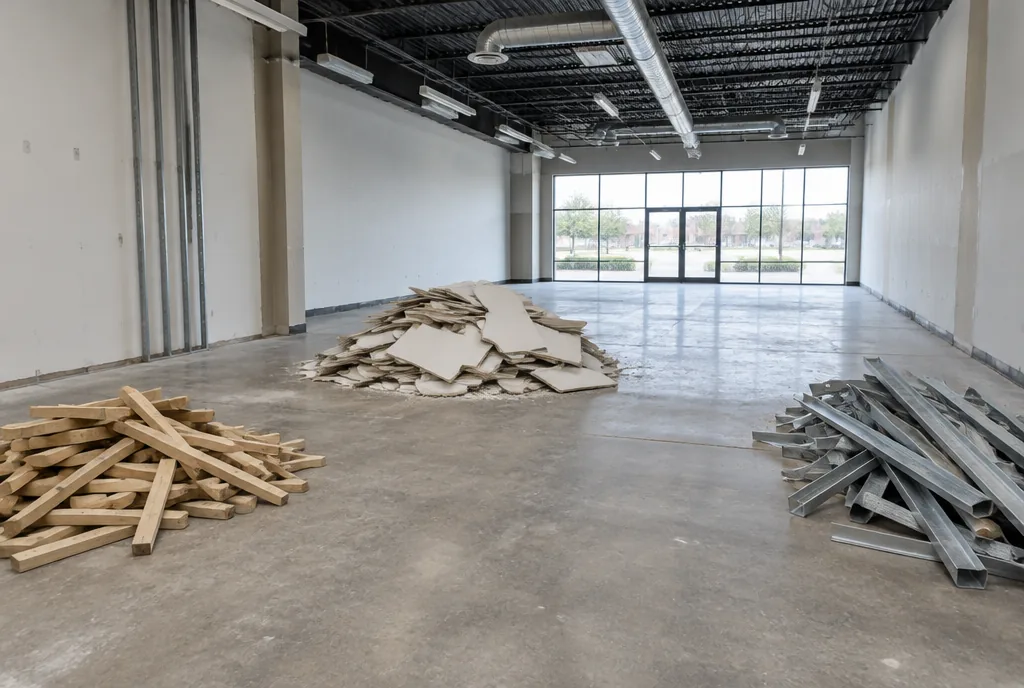
Commercial renovation waste disposal in Houston
Commercial renovation waste disposal in Houston covers qualifying building debris from business-property projects, from an interior strip-out to a larger reconstruction. Plan the materials, receiving station and hauling arrangement together. Bring qualifying loads to Neuens Road or Holmes Road, with concrete and pavement asphalt directed separately from mixed C&D.
Commercial renovation waste follows the material
An office remodel is one example of commercial renovation, not the limit of the service. Retail build-outs, warehouse alterations, building reconstruction and industrial-facility improvements can all generate ordinary construction materials. The disposal decision depends on the removed material, its condition and what is mixed into it.
At Holmes Road, the Tannahill mixed-C&D path includes qualifying lumber, drywall, metals, plastics and cardboard. Dirt and roofing shingles do not belong in that load. Concrete and pavement asphalt are routed to Houston Crushed Concrete separately. Neuens Road receives qualifying waste through DW Companies, with the particular load described when arranging arrival.
Industrial rework needs the same material-first approach. Removed partitions may be ordinary construction debris, while process liquids, chemical residues or contaminated equipment require another arrangement. Use industrial renovation debris planning for that distinction. The name of the business or industry is less useful than a clear account of the actual waste.
Separate building finishes from fixtures and contents
A business-property strip-out often combines two jobs: taking out building materials and clearing the contents of the space. Keep those lists separate. Drywall, framing and packaging describe a construction load. Office equipment, refrigeration units, batteries, stored products and leftover maintenance chemicals introduce item-specific decisions.
For example, a removed partition and an old breakroom appliance should not be grouped under “office waste” without further detail. Freon-containing items, liquids, oils and batteries stay out of ordinary qualifying C&D. Identify fixtures, furniture and unusual contents individually in the inquiry, rather than burying them beneath the construction-material description.
Where intact components have a reuse plan, remove them before they become damaged in the debris pile. That might change how much waste remains to haul, but it should be a real project decision rather than an assumed recycling outcome. Review accepted construction materials before consolidating building finishes, loose contents and dense rubble into one load.
Plan debris around occupied buildings
On an occupied commercial property, the waste plan needs to work alongside tenants, deliveries and the trades. Choose a staging area that lets the project collect debris without treating a public entrance or shared circulation route as a temporary dump. Keep the material split clear enough that successive crews can maintain it.
Plan the handoff between the team removing material and the person hauling it. An estimate prepared before strip-out can change when concealed layers or larger assemblies are removed. Update the material description before the truck is loaded, especially when a later phase introduces concrete, equipment or a different waste type.
A useful hypothetical sequence is to clear reusable contents first, remove qualifying interior building debris next, then handle slab or pavement work as a separate stream. Your project may have a different sequence; the purpose is to keep its disposal arrangements aligned with what is leaving the building. The multiple-load planning guide helps organize that change without assuming every trip will contain identical debris.
Assign a clear boundary between material that remains in service and material being discarded. In a partially occupied building, identical-looking pallets, cabinets or boxed products may have very different roles. The waste plan should identify what is actually released for removal, who authorizes additions and which material stream receives it. That is a project-control step, not a reason to treat everything near the work area as debris.
For a hypothetical retail reconstruction, the tenant might retain display equipment while the contractor removes partitions and damaged finishes. Keep retained equipment out of the construction pile, identify removed fixtures individually and send the ordinary C&D description with the hauler. If concrete cutting or pavement work follows, issue a separate rubble instruction. This keeps the disposal request aligned with the work being performed rather than with an imprecise label such as store cleanup.
Select the receiving location for your load
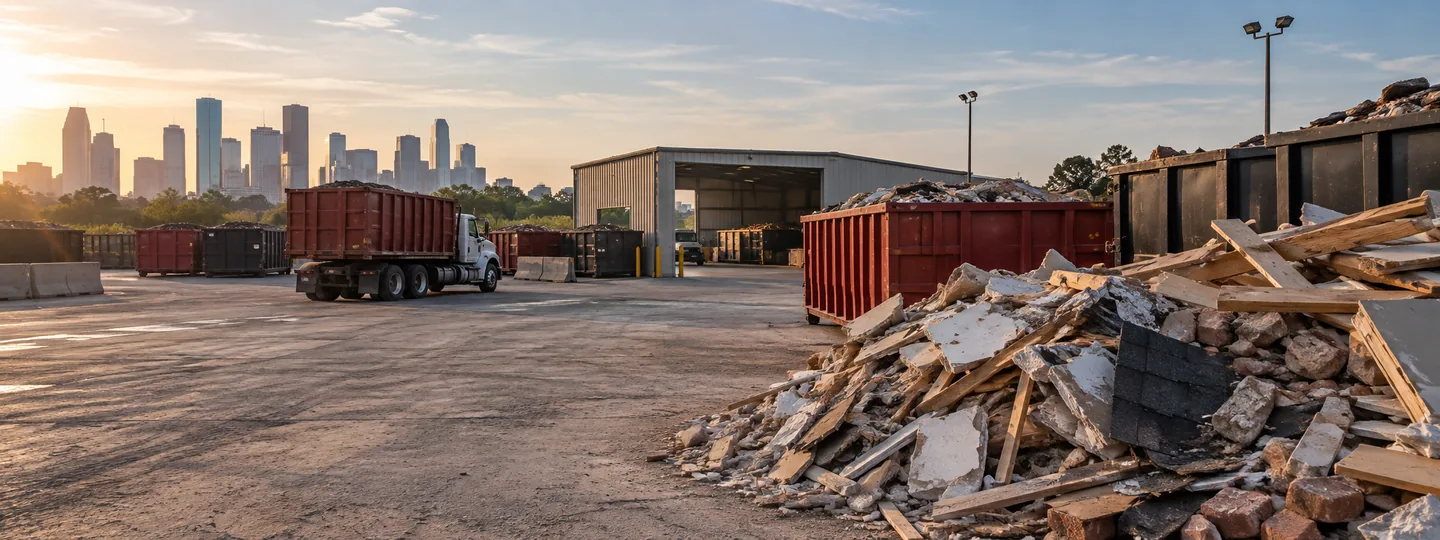
For Neuens Road, contact DW Companies at 713-465-7231 about qualifying waste arriving at 9461 Neuens Road, Houston, TX 77080. Give the material, approximate amount and vehicle so the load and arrival instructions can be reviewed together. The Neuens Road transfer station page keeps that receiving inquiry separate from ordering a dumpster to your property.
Tannahill’s Holmes Road station is at 1800 Holmes Road, Houston, TX 77045. Its published schedule is Monday through Friday 7 AM to 5 PM, Saturday 7 AM to 1 PM and Sunday closed. Call 713-657-0004 for the mixed-C&D load inquiry. Drivers bring a hard hat and safety vest, check in and unload where directed.
Concrete or pavement asphalt at the Holmes Road facility follows the separate Houston Crushed Concrete path, on 713-799-2000. Tell the project team which operation is receiving which material. A single site address does not make mixed renovation debris and clean rubble the same receiving stream.
Price and schedule the renovation disposal work
Begin with the material list and how much will leave during each phase. State whether you have an existing truck or trailer, need a temporary container or are comparing both. Include large individual items and describe mixed debris accurately. That gives the inquiry a defined scope rather than the open-ended label “commercial cleanout.”
Self-haul can fit a business project that already has a driver and transport available. A roll-off can suit continuous debris generation or limited opportunities to take a vehicle off site. Compare the total handling arrangement, including crew time and the need for a collection point, rather than comparing a bare disposal figure with a rental price that covers different work.
Commercial dumpster rental remains a supporting option. If self-haul fits, request disposal pricing with the intended station, vehicle and arrival date. If the job will change from interior finishes to structural rubble, describe that change at the start so the two phases can be planned separately.
Interior demolition materials and load quality
Gypsum board and composite assemblies
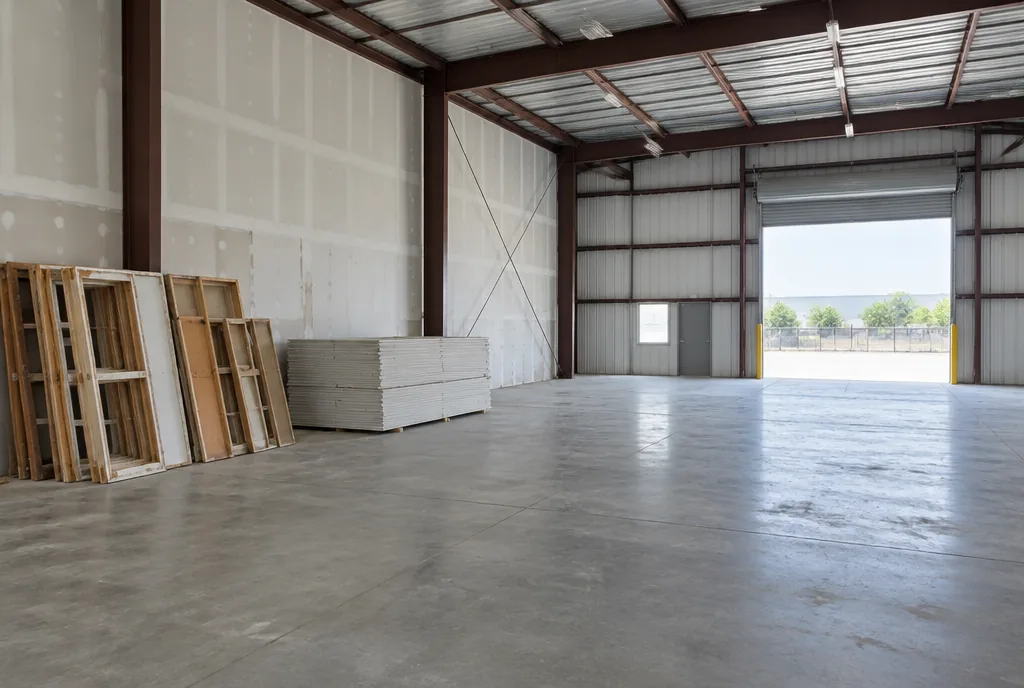
Drywall is gypsum board, commonly made with a gypsum core and paper faces. A removed wall is more than its board: framing, finishes and attached components can leave together. Describe an actual tear-out load as mixed building material when that is what it contains, rather than calling it clean drywall solely because the visible surface is wallboard.
Source separation is most useful before demolition scatters those components through the pile. Dedicated piles or containers can preserve an identifiable material stream. Whether separate handling is worthwhile depends on the actual amount and the receiving arrangement, not just the ability to name a recyclable component.
Moisture and debris condition
Material condition matters to both handling and load description. Wet or heavily coated debris is different from dry new-construction offcuts. Describe that condition rather than using a clean-material label that leaves it out. Irregular framing and intact assemblies can also occupy a great deal of space because they trap air gaps. Keep volume estimates separate from vehicle weight limits when planning renovation debris transport.
Answered Questions
What commercial projects can bring renovation debris?
Bring qualifying building debris from commercial renovations, retail build-outs, warehouse alterations, reconstruction and industrial-building improvements. Material eligibility determines the receiving path. Concrete, ordinary mixed C&D and specialist process waste should be identified separately.
Can business equipment go with drywall and lumber?
List equipment and contents separately from building materials. Refrigerant-containing items, batteries, liquids and chemicals stay out of the ordinary mixed-C&D load. Describe large fixtures, furniture and unusual items individually so the disposal arrangement covers what you are actually removing.
What if the renovation produces concrete too?
Keep the rubble separate from mixed interior debris. At the Holmes Road facility, concrete and pavement asphalt go through Houston Crushed Concrete on 713-799-2000. Planning that stream before loading prevents an interior-debris approval being treated as permission for every later phase.
Should I rent a dumpster for an occupied commercial property?
A temporary container can provide a dedicated collection point while trades work, provided its placement and loading arrangement fit the property. Self-haul can work when your own transport and driver are available. Compare debris generation, staging space and time away from the site when deciding.
Give the renovation a material-by-material disposal plan
Send the project type, actual debris, approximate quantity and preferred receiving station. Include any equipment, concrete or later demolition phase so the inquiry reflects the complete disposal task.