
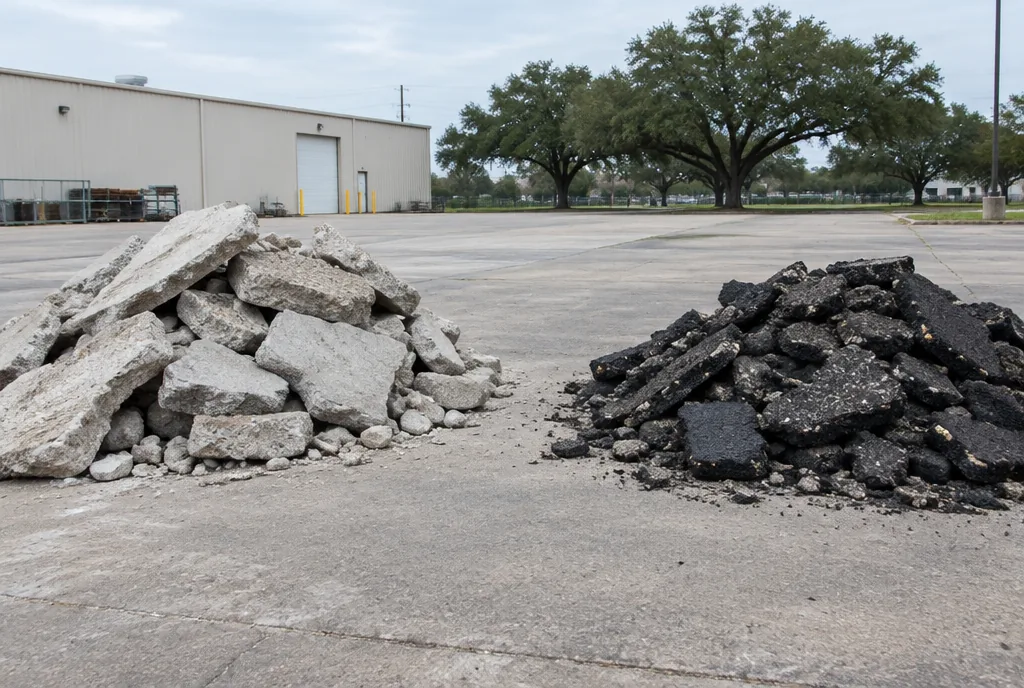
Accepted construction waste materials
Accepted construction waste materials depend on the receiving operation and the actual load. Keep mixed C&D, separated heavy material and excluded items distinct before choosing a Houston destination.
Mixed C&D and separated heavy material
Construction and demolition waste describes debris from building, renovation and demolition work. It can include several material types, and a receiving operation does not necessarily accept every one. A useful load description identifies the dominant materials, where they came from and anything attached, mixed or unusual.
Keep concrete and pavement asphalt separate from wood, drywall and general debris. At the shared Holmes facility, Houston Crushed Concrete receives concrete/asphalt requests separately from Tannahill’s mixed-C&D operation. Concrete acceptance, attached material and handling details belong in that specific conversation.
For Neuens Road, describe the intended load and arrange receiving details with DW Companies before arrival. Do not apply another yard’s material list or cutoff automatically. The location comparison explains the two destinations; heavy-material disposal explains the separate concrete/asphalt path.
Qualifying Holmes Road construction materials
Tannahill’s published mixed-C&D information includes qualifying wood, drywall, metals, plastics and cardboard. Eligibility is about the actual contents, rather than the words “commercial renovation” on the project. Tell the receiving team if the load includes coatings, wet material, attached components or anything that changes the description.
A strip-out load containing ordinary timber and gypsum board should be described differently from a container of concrete. Likewise, material from an industrial building should be identified by composition and source; process waste is not an ordinary construction-material category. Keep the discussion specific enough for the receiving operation to understand what will arrive.
Review wood and drywall disposal and mixed construction debris for those common planning questions. For a building demolition, identify the streams before bulk loading.
Keep prohibited items out of the load
Tannahill excludes dirt and roofing shingles. Published exclusions also cover regulated hazardous waste, liquids and several specialist items, including tires, lead-acid batteries, oil/filters and Freon-containing items. A pavement-asphalt request is different from a roofing-shingle load.
Do not place suspected asbestos-containing material, chemicals, process residues or other specialist waste into ordinary C&D to simplify transport. These need an appropriate separate handling and destination decision. Unknown material should be identified before mixing, rather than left for the driver to explain at the gate.
Read the prohibited-material planning guide before assembling a complicated load. Use it to identify items that need a separate handling and disposal route. Rental restrictions are also separate from receiving-yard rules; a designated concrete/dirt rental container does not establish dirt drop-off acceptance.
Describe composition and source
For a disposal request, list the main materials and the kind of work that generated them. Add the approximate quantity, vehicle or container, preferred destination and expected timing. If the project will produce separate loads, identify each stream rather than combining the descriptions into “construction waste.”
Source separation keeps a material apart before hauling. That can preserve receiving options for heavy mineral material and make mixed-C&D descriptions clearer. It is practical only when the crew has space, suitable equipment and a confirmed destination for each stream. Separate piles alone do not establish recycling or a documented diversion result.
The separation guide helps plan the collection area, while load estimates helps communicate quantity. Once those inputs are clear, request the receiving and pricing information for the actual load.
Answered Questions
Can dirt go to Tannahill with demolition debris?
No. Tannahill’s current receiving information excludes dirt. Keep it out of a mixed-C&D load, and do not treat a designated dirt-rental setup as proof of yard acceptance.
Are asphalt pavement and roofing shingles the same receiving stream?
No. Pavement asphalt and roofing shingles are different materials and receiving questions. Tannahill excludes roofing shingles; concrete and asphalt requests at the shared facility go to the separate Houston Crushed Concrete operation.
Does a commercial project make every item eligible?
No. Eligibility depends on composition, source and the receiving operation. Industrial process waste, chemicals, liquids and regulated materials are not ordinary building-debris loads.
Put a receiving plan behind your next load.
Share the material, approximate quantity and preferred location to request disposal instructions and a quote.