
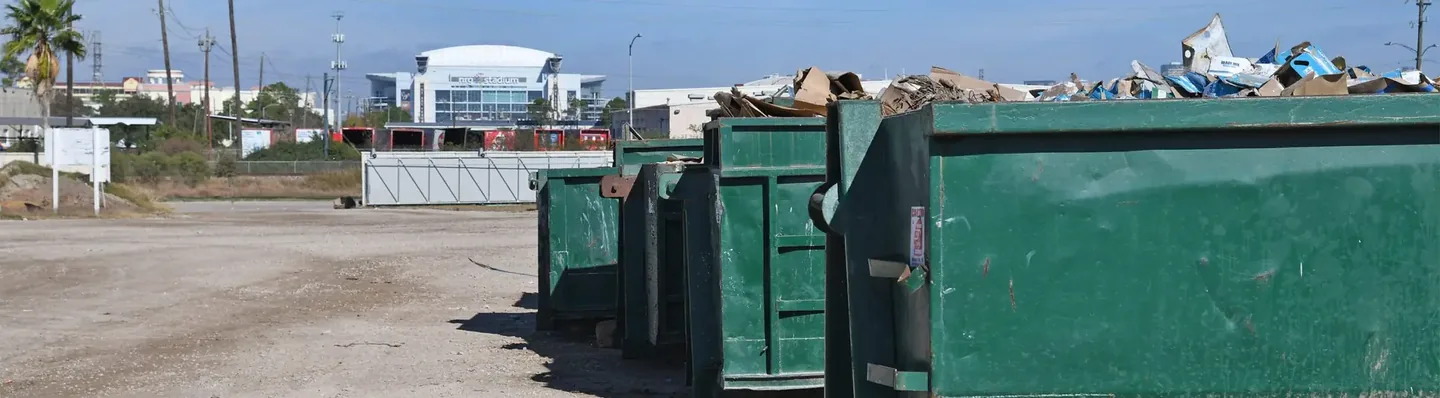
Construction waste disposal in Spring Branch
Construction waste disposal in Spring Branch starts with separating your commercial renovation debris into loads for the right receiving operation. Bring qualifying commercial debris to DW Companies on Neuens Road or Tannahill on Holmes Road, with concrete and pavement asphalt handled separately. Send your load description, vehicle and intended day for a disposal quote.
Bring a Spring Branch commercial load to the right receiving operation
For a commercial renovation along Long Point Road, start with the waste leaving the property: removed wallboard, framing, packaging, fixtures or a separate pile of broken pavement. The project name helps identify the job, but the contents determine the receiving arrangement.
DW Companies at 9461 Neuens Road, Houston, TX 77080, receives qualifying waste. Call 713-465-7231 with your particular materials and vehicle to arrange the load. For Tannahill at 1800 Holmes Road, Houston, TX 77045, qualifying mixed C&D includes wood, drywall, metal, plastics and cardboard. Tannahill excludes dirt, roofing shingles, liquids, chemicals and hazardous or regulated waste from that mixed-debris stream.
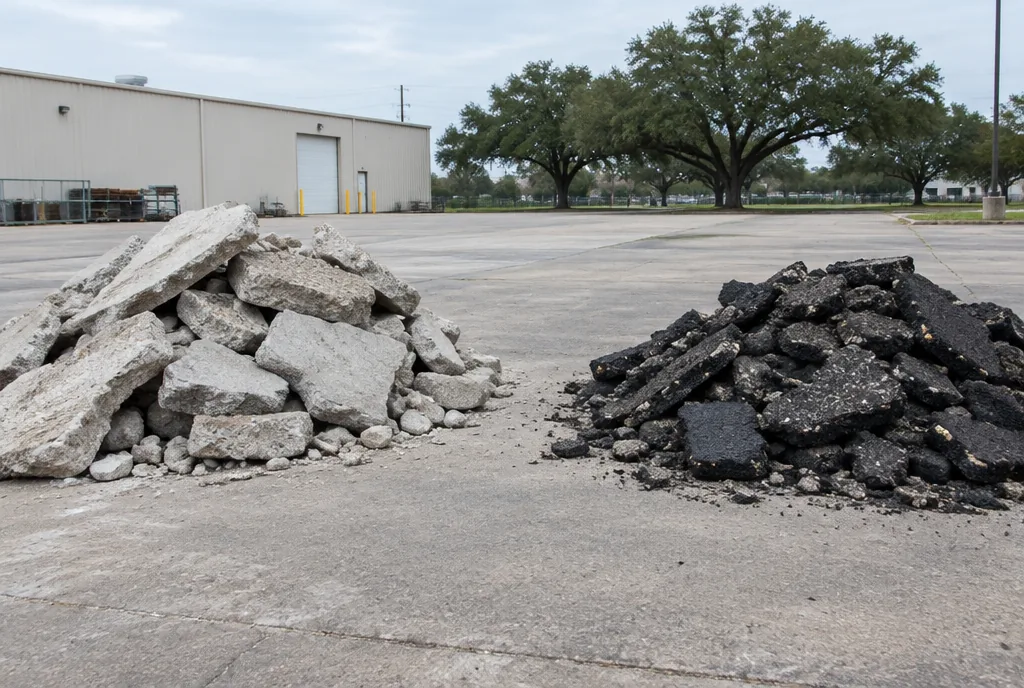
Concrete and pavement asphalt at the Holmes Road facility follow the separate Houston Crushed Concrete path at 713-799-2000. Give that operation the rubble description before sending the truck. Use the material guide to separate the main streams, then identify the actual mixture in your request for either station.
Separate storefront tear-out from the next rubble load
Mixed interior building debris
Consider a storefront renovation that starts by removing partitions. Drywall, wood framing, metal studs and attached finishes can leave together. Describe the resulting mixture, including large fixtures or unusual components, rather than calling it clean lumber or clean wallboard. The loading crew should know which retained goods and equipment stay at the property.
Set the collection area before demolition begins. Keep containers of leftover products, batteries and refrigerant-containing equipment apart from ordinary building debris. If a wall assembly raises a concern about asbestos, lead or another controlled material, resolve its handling through the appropriate specialist before it joins a general construction pile.
Concrete and pavement phases
The same renovation might later include replacing a concrete apron. Keep that rubble separate while it is easy to identify. Concrete is dense, and a load that looks small beside bulky framing can place a much greater weight on the vehicle. Note attached material and reinforcing metal when describing it for concrete or asphalt receiving. A later rubble phase needs its own material description even when the contractor and project address stay the same.
Make each disposal trip useful to the project
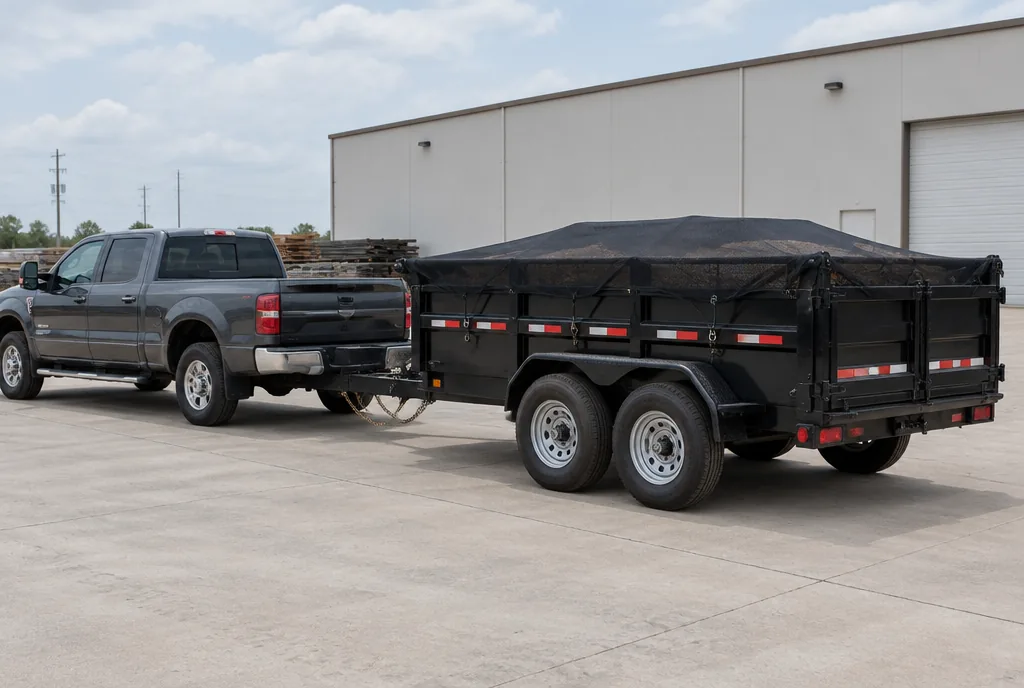
A truck, trailer and available driver can make customer hauling a practical way to remove a finished batch of debris. It is most useful when the material is ready, the vehicle suits the load and the trip fits the work sequence. Account for loading, travel, check-in, unloading and the return to the project.
The disposal charge is only one part of that choice. A crew member driving away is unavailable for work on site, and several lightly filled trips may use more project time than one planned movement. Conversely, keeping a container at a short project can add a collection step when a suitable vehicle is already available.
Use the same material and quantity assumptions when comparing self-haul with rental. A roll-off provides a collection point while work continues; your team loads it, and delivery and pickup are arranged through the rental. Request commercial dumpster rental when that solves the project's staging or transport need. Loading assistance is arranged separately.
Describe the material and amount for a Spring Branch quote
For a useful quote, send the main materials, the work that produced them and anything mixed into the pile. “Drywall and wood partitions removed from a storefront, with metal studs” is more informative than “one load of construction trash.” Add the intended receiving location and day, the vehicle and a contact who can explain changes.
State how the quantity was estimated. A measured pile, a partly filled trailer and a trailer's advertised capacity describe different amounts. Cubic yards measure space, including gaps between irregular pieces; they do not establish the weight. Avoid treating an empty bed's capacity as the volume of debris actually aboard.
If you expect repeated trips, give the first load and later phases separately. That lets the disposal quote follow the real material movement. A changed mixture, different vehicle or added rubble should travel with an updated description, rather than remain buried in a general project note.
Keep the Long Point job and the receiving address distinct
Give the driver two clearly labeled addresses: where the debris is collected and where the agreed load will be received. The Long Point project address identifies the origin. The receiving instruction names DW Companies at 9461 Neuens Road, Tannahill at 1800 Holmes Road or the separate Houston Crushed Concrete operation, as appropriate.
Include the material, approximate amount, vehicle, contact and arranged arrival details with that instruction. For Tannahill, bring a hard hat and safety vest, check in and unload where directed. The drop-off preparation guide helps organize the trip.
At a shared project collection point, assign one person to release material for loading. That keeps retained stock and another trade's equipment out of the departing pile. If requesting a container instead, supply the actual project ZIP code and access details so placement is planned for the property where work occurs.
Spring Branch along Long Point Road
Long Point Road is a central part of Spring Branch's local identity. Its corridor between Gessner Road and US 290 connects shops, businesses and nearby residential areas. The Elizabeth L. Ring Neighborhood Library at 8835 Long Point Road is a familiar community destination along that corridor, with Campbell Road another useful point of orientation.
Spring Branch is a broad Houston community with individual neighborhoods and commercial corridors, rather than one uniform subdivision. A project on a main business road can have a different collection arrangement from a smaller property nearby. Use the actual site address and the property team's loading plan when organizing debris removal.
Nearby Memorial City has its own office and retail setting around I-10 and Gessner. Compare the project service areas and receiving locations when coordinating more than one job, while keeping each load's origin and destination clear.
Answered Questions
Can I bring a small trailer load from a Spring Branch renovation?
Yes. Describe the renovation materials, approximate amount and the pickup or trailer you will use. Arrange the particular load with DW Companies for Neuens Road or with Tannahill for qualifying mixed C&D at Holmes Road before dispatch. A small vehicle still needs a clear material description and suitable load capacity.
Can the same load include drywall and a broken concrete apron?
Keep the broken concrete separately planned. Mixing dense apron rubble into drywall and framing changes both the load composition and its transport weight. At Holmes Road, concrete and pavement asphalt go through Houston Crushed Concrete, separately from Tannahill mixed C&D receiving.
What if my crew already has a truck and driver?
Use that equipment in the comparison, including the time needed to load, drive, unload and return. Self-haul can fit a ready batch; a container can fit work that keeps generating debris. Compare the whole task, including driver availability and on-site collection space.
What do I need for a disposal quote before loading?
Send the material and its source, anything attached or mixed in, approximate amount and the basis for that estimate. Include the vehicle, preferred station, intended day and contact details. Update the request if later work produces a different material stream.
Plan the Spring Branch load before dispatch
Request a disposal quote with your materials, approximate quantity, vehicle and preferred receiving location. For a jobsite container, include the project ZIP code and placement needs.