
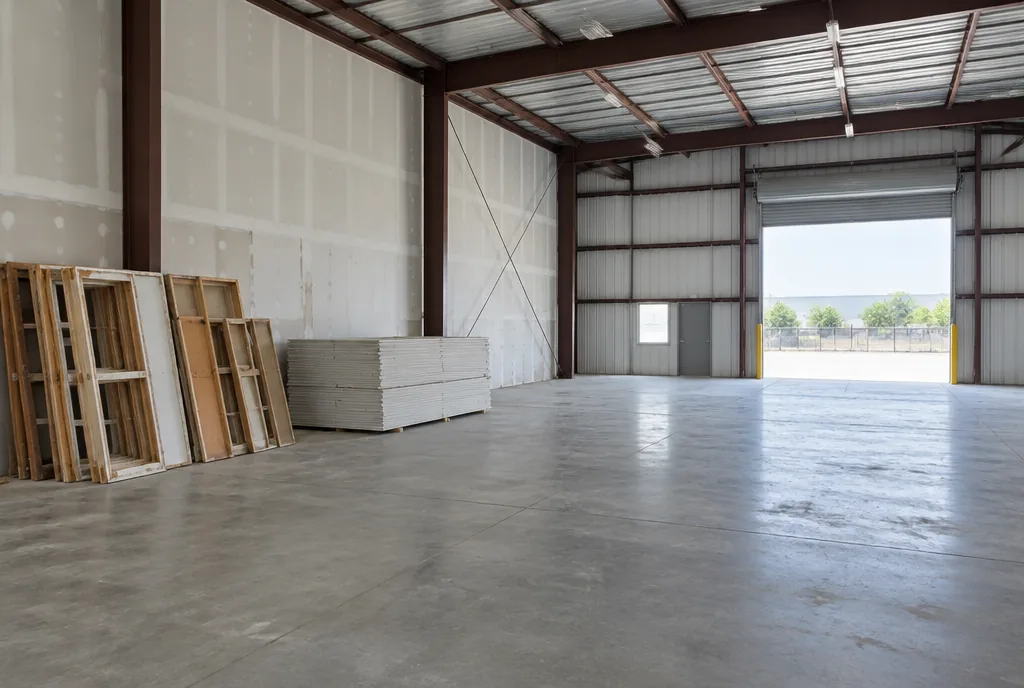
Planning debris disposal for industrial renovations
Plan debris disposal for industrial renovations by separating ordinary building C&D from production residues, chemicals and process equipment contents. The building project and the industrial operation may share an address, but their waste streams need different decisions.
Distinguish building work from industrial process waste
A warehouse partition removal can generate recognizable drywall, framing and metal. A production-line change can also uncover materials associated with manufacturing. The fact that both occur inside an industrial property does not make all of the resulting waste ordinary construction debris.
Describe the work and material origin precisely. A clean office partition within a facility is a different enquiry from debris affected by a manufacturing process. Include how the area was used and identify any coatings, residues or unknown contents that affect the description.
This site's commercial disposal path concerns qualifying construction and demolition material. Industrial process waste, liquids, hazardous waste and remediation are outside that offer. The construction debris receiving request should represent the ordinary C&D stream being proposed, not a general authorization for everything removed during a plant project.
Inventory the renovation by work zone
Break the renovation into identifiable zones: offices, storage, building structure, service areas and production-related areas as applicable. Use the project team's knowledge of each space to describe what is being removed. A material inventory that preserves origin is more useful than a combined pile labeled industrial renovation.
For each work zone, record the main material, approximate amount and whether it is separated or mixed. Distinguish the building components from stored products, equipment contents and maintenance supplies. The collection plan can then follow the actual removal sequence.
Keep that information available to the crew and dispatcher. If several contractors work in different areas, a simple zone or phase reference helps prevent unrelated material from entering the same load. Start with material separation while the origin of each stream is still easy to identify.
Give each work package a material note
Attach a short debris note to each renovation phase: source area, visible components, approximate amount and materials kept outside the C&D stream. This gives the construction team something concrete to hand to the dispatcher. It also avoids treating every later removal as though it came from the first reviewed work area.
For example, removal of ordinary office partitions and removal of a production enclosure should have separate descriptions even when scheduled on the same day. The second task can have a different source history and require information the first did not. Keep those differences visible before material is staged together.
Update the note as actual conditions are exposed. An early estimate can guide capacity planning, but the final load description should reflect what is actually ready to leave. Keep unresolved process-related or suspect-material decisions distinct so they cannot be mistaken for approval to combine those streams with the construction load.
Separate ordinary C&D from unknown equipment and residues
Keep unidentified drums, containers, liquid residues, oils, chemicals and process-related materials outside the ordinary construction load. Dismantling an item does not change the identity of its contents. Do not use a C&D container as a convenient place to finish clearing a production or maintenance area.
Building materials that raise a specific hazardous-material concern also need their appropriate project process. Do not rely on appearance to identify asbestos or other suspect substances, and do not mix suspect material into general debris while the issue is unresolved.
The practical boundary is straightforward: the ordinary construction stream must remain identifiable. The project's responsible personnel need to resolve unfamiliar material and any specialist requirements separately. This guide does not offer an industrial-waste treatment, hazardous handling or building-demolition crew service.
Match the construction debris to a receiving path
Once the C&D stream is defined, match it to the receiving arrangement. Neuens Road and Holmes Road provide the two commercial enquiry paths. State the facility origin of the material, its condition, quantity and proposed vehicle. For an industrial-building project, origin and condition belong in the request even when the visible components seem familiar.
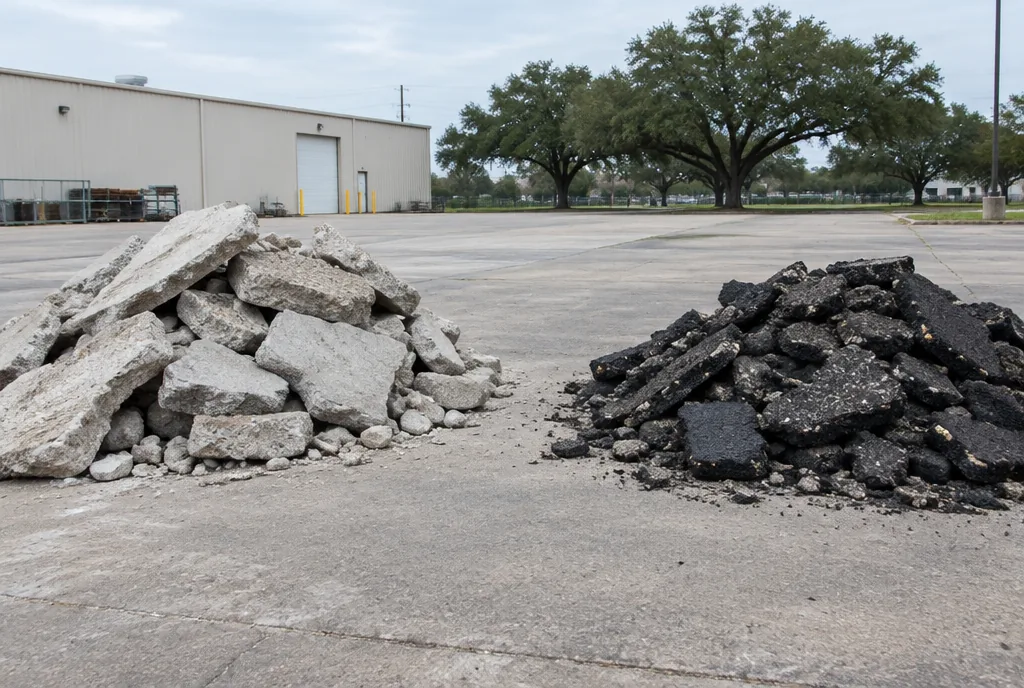
Tannahill at 1800 Holmes Road receives qualifying mixed C&D and excludes dirt and roofing shingles. Concrete and pavement asphalt use Houston Crushed Concrete separately at the shared facility. Do not combine a slab-removal stream with miscellaneous building debris merely because it comes from the same renovation.
Use the receiving-location overview to organize the enquiry, then keep the actual instructions with the dispatch record. The result should be a destination for the described construction load, rather than an assumed destination for the entire property.
Coordinate occupied facilities and successive phases
Industrial renovations often have a sequencing problem before they have a disposal problem. Work may need to remain separate from occupied offices, deliveries or an ongoing operation. Treat the waste collection area as part of the project's access plan, with clear responsibility for keeping the intended stream identifiable.
Choose between self-haul and a container according to how the work produces material. A defined removal phase may suit a planned haul; an extended building alteration may benefit from a collection container. Protect the pickup or loading route as the work area changes.
For example, an office refurbishment inside a warehouse might generate mixed wallboard and framing first, then a separate concrete alteration. Write those as different movements with different descriptions. Plan successive loads by stream and work phase instead of estimating all waste as one undifferentiated industrial total.
Technical detail: source history and changing material streams
The source of waste matters
TCEQ treats industrial waste as a category associated with industrial operations, including manufacturing. Nonhazardous is not a synonym for unrestricted receiving. A material's origin and characteristics can affect the disposal route independently of whether it resembles familiar construction debris.
Maintain identity through a changing project
Renovation changes what is visible. Opening an enclosure or removing equipment can expose a different stream from the one initially estimated. Keep the material description tied to the actual phase and update it when the source or condition changes.
Use a practical record with zone, material, quantity estimate, assigned receiving path and project contact. Preserve separate notes for anything excluded from ordinary C&D. This allows the construction team to keep progressing on the defined stream without obscuring unresolved material in a mixed load. The objective is a clear, usable construction-waste plan, not a label that makes every industrial material acceptable.
Answered Questions
Can ordinary construction debris come from an industrial building?
Yes. Building alterations can produce ordinary wood, drywall and other C&D, but the material origin and condition still matter. Keep construction debris separate from production residues and describe the actual stream for receiving review.
Does nonhazardous mean any transfer station can receive it?
No. Nonhazardous material can still have specific receiving requirements. Do not use that label alone to route an industrial stream; identify its source, components and condition.
Should equipment contents go with demolition debris?
No. Equipment contents and process-related materials need a separate decision before the surrounding construction debris is loaded. An equipment-removal project does not turn oils, liquids or unknown contents into ordinary C&D.
Describe the building work and its debris
Send the renovation scope, material origin, condition, quantity and planned vehicle. Keep process-related and unidentified streams separate from the C&D request.